

Safari experts & storytellers. Since 1991



Trust us to find you the rarest animals, the most spectacular wildlife events, the remotest landscapes and deeply meaningful cultural encounters!
Which Uganda chimp trekking site is right for you? Kibale vs Budongo vs Kyambura Gorge
Uganda offers chimpanzee trekking at three main sites – Kibale National Park, Budongo Forest and Kyambura Gorge in Queen Elizabeth National Park. Kibale has the largest habituated population and the highest success rate; Budongo is quieter and cheaper; Kyambura Gorge is the most affordable of the three but carries the lowest chance of a sighting, tracking a small, isolated troop through a dramatic river gorge.
Every Uganda safari conversation eventually turns to the same decision: Kibale, Budongo Forest, or Kyambura Gorge. All three put you within reach of a wild chimpanzee troop, but they’re not interchangeable. Kibale has been trekked for close to three decades, and its chimps are so accustomed to people that a sighting feels close to guaranteed. Budongo, further north, offers a quieter trek into a Murchison Falls itinerary already loaded with river cruises and lions. Kyambura Gorge asks more of you and promises less certainty in return, a steep descent into a river gorge for a small troop still recovering from decades of isolation. The right site depends less on which forest is best and more on what the rest of your Uganda safari already looks like.
For most first-time chimp trekkers, Kibale is the best overall choice; Budongo is the stronger fit for a Murchison Falls itinerary, while Kyambura works best as an add-on to Queen Elizabeth National Park.
Uganda's three chimp trekking sites at a glance
Uganda offers chimpanzee trekking at three distinct sites, each with its own forest character, permit price and likelihood of a successful sighting on the day.
Kibale: highest success rate, largest troops, premium permit price
Budongo: quieter trails, mid-range cost, part of the Murchison circuit
Kyambura Gorge: lowest cost, lowest success rate, dramatic river gorge setting
Kibale, Budongo and Kyambura Gorge compared
Site | Permit cost (foreign non-resident) | Success rate | Trek duration |
Kibale National Park | Around US$250 per person | Highest of the three | 1-3 hrs tracking, 1 hr with chimps |
Budongo Forest | Around US$130 per person | Solid, slightly lower | 30 min-4 hrs tracking, 1 hr with chimps |
Kyambura Gorge | Around US$100 per person | Lowest of the three | Around 2 hrs total |
3 things we love about Uganda's chimp forests
Beyond the trekking itself, here’s what makes Uganda's forests genuinely worth building a longer safari itinerary around, based on season after season of visits.
Three distinct forests: Kibale's dense rainforest, Budongo's mahogany canopy and Kyambura's river gorge each feel entirely different from one another.
A working conservation model: permit revenue funds ranger salaries, ongoing habituation research and community development projects around each reserve.
A natural pairing: each site sits close to a major park, so a chimp trek slots easily into a wider Ugandan primate, birding or Big Five safari itinerary.
Our favourite Chimp trekking safari ideas
An overview of Uganda's chimp trekking forests
Kibale National Park
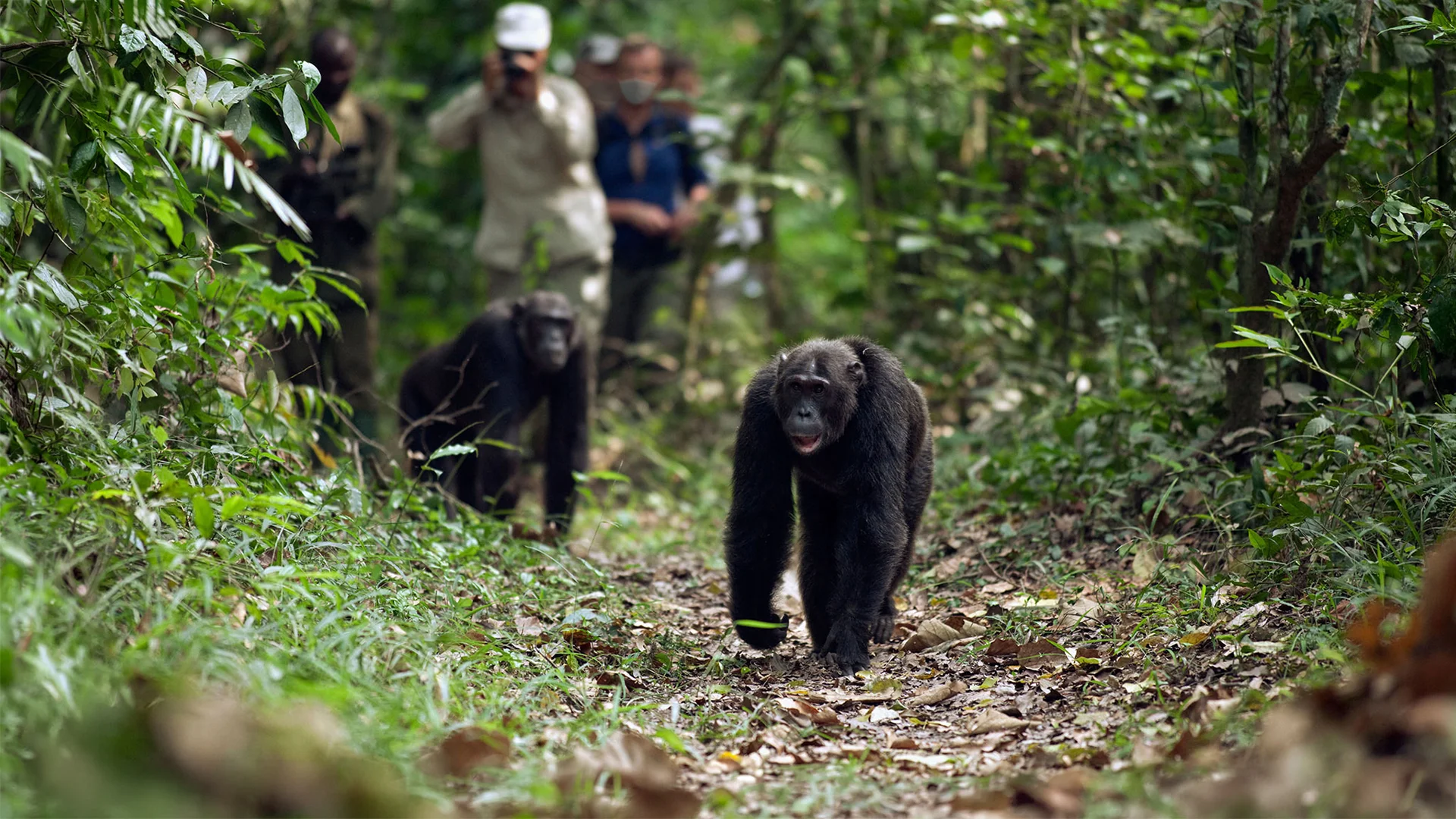
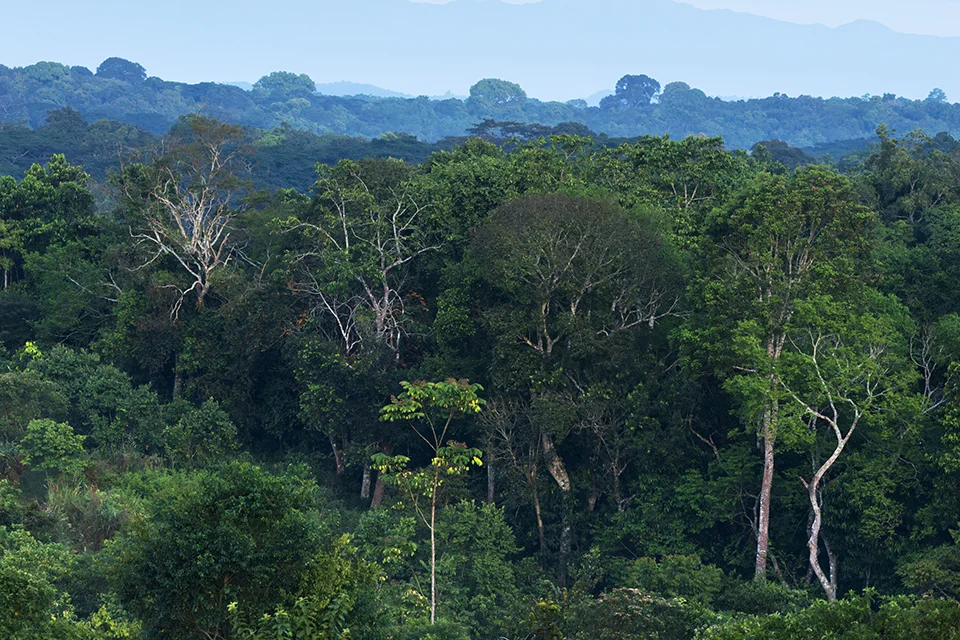
Kibale National Park is Uganda's best-known chimpanzee trekking destination and offers the strongest chance of a sighting. Kibale borders Queen Elizabeth National Park along its northern boundary and is home to over 1,000 individuals across several habituated troops. Nearly three decades of trekking history give Kibale the country's highest success rate, alongside a dozen other primate species across its 776 km² of rainforest.
Budongo Forest
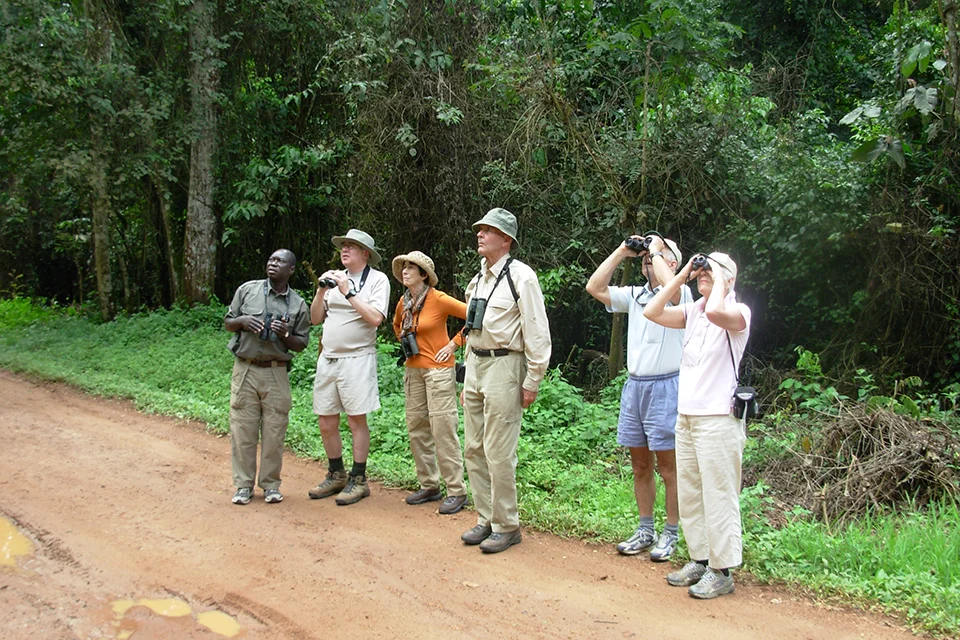
Part of the wider Murchison Falls Conservation Area, Budongo spans 825 km² of mahogany forest split into six blocks. Trekking currently focuses on the Kaniyo-Pabidi community of around 100 chimps, while two larger research troops remain closed to visitors, keeping trails quieter and permits more affordable.
Kyambura Gorge
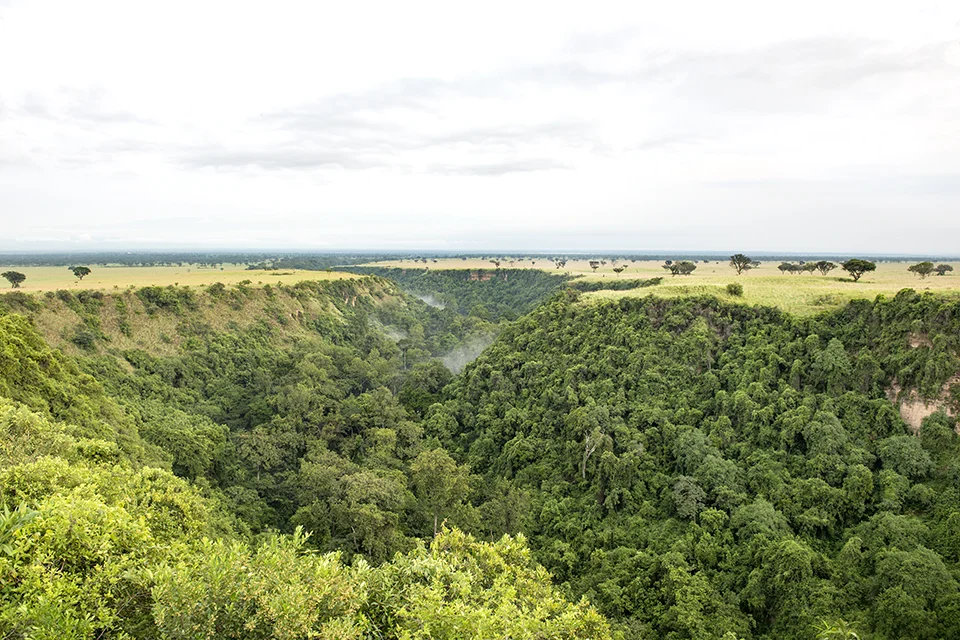
A dramatic forested gorge cut into the savannah in the northeast portion of Queen Elizabeth National Park, Kyambura shelters a small, isolated troop locally known as the Lost Chimpanzees. Sightings aren't guaranteed, but the gorge setting, hippos, and birdlife make the trek worthwhile in its own right.
Kibale National Park in detail
The forest and its chimpanzees
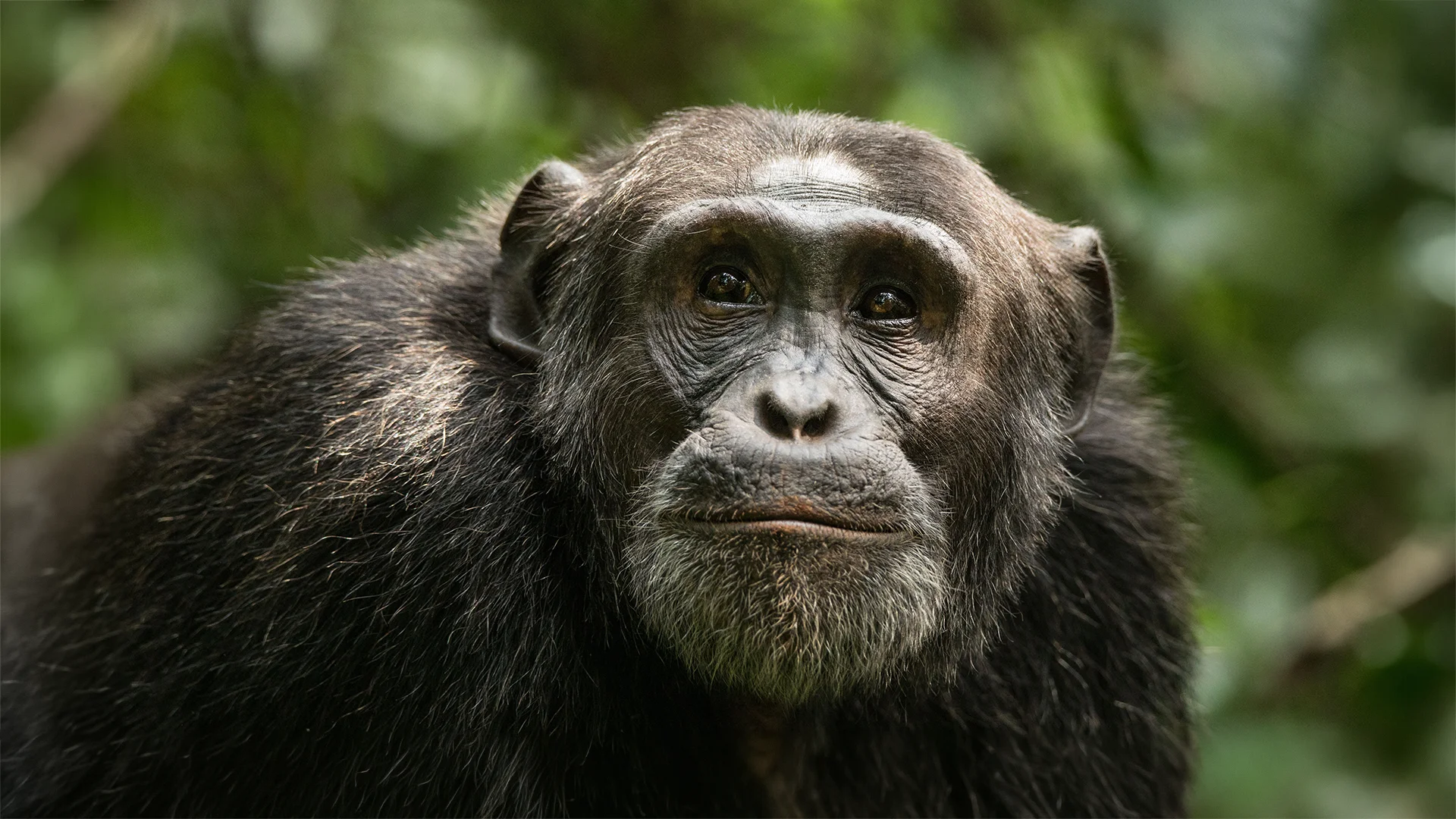
Kibale's 776 km² of rainforest holds a dozen primate species, but chimpanzees are the headline act. With over 1,000 individuals across several communities and close to three decades of habituation, this is the park where a sighting is closest to guaranteed. The forest borders Queen Elizabeth National Park, so wildlife occasionally wanders between the two.
What a Kibale trek involves
Rangers lead small groups into the forest, tracking chimps for one to three hours by call and signs of feeding, often heading to known fruiting fig trees, before spending an hour in their company. A more demanding chimpanzee habituation experience is also offered here, running four to six hours with the research team as they work to habituate a wild troop, at a higher permit cost and lower availability.
Kibale at a glance
Permit cost: US$250 per person (subject to annual reviews and changes) for foreign non-residents, booked well in advance
Success rate: among the highest of any Ugandan chimp trekking site, close to 90 percent
Trek duration: one to three hours of tracking, followed by one hour in the chimps' company
Habituation option: a longer four to six hour experience, with far fewer daily permits issued
Nearest stay: Primate Lodge Kibale, the only lodge inside the national park
Pairs naturally with: a wildlife activity next door in Queen Elizabeth National Park
Best months: June to September and December to February offer drier forest trails
Fitness needed: moderate, on well-maintained but occasionally muddy forest paths
Budongo Forest in detail
A quieter forest experience
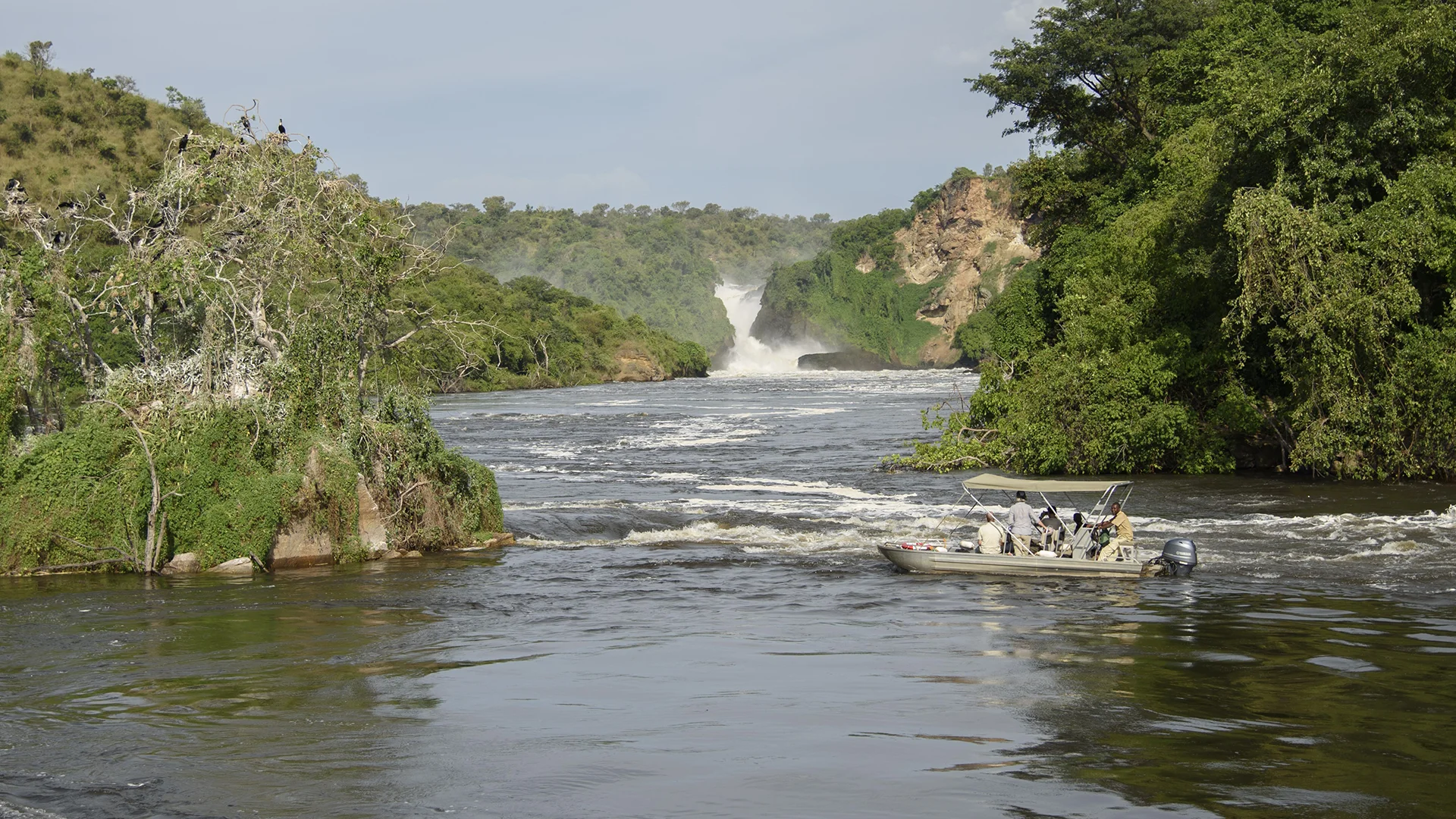
Budongo forms part of the larger Murchison Falls Conservation Area, an 825 km2 reserve of mahogany forest split into six blocks. Three chimpanzee communities are studied here, but only the Kaniyo-Pabidi troop of around 100 individuals is currently open to visitors, while the larger Sonso and Waibira communities remain reserved for ongoing research and are not trekked for by tourists.
Trekking Budongo's chimpanzees
Guides lead small groups from the Kaniyo-Pabidi trailhead, and finding the troop can take anywhere from thirty minutes to four hours over roughly 8km of forest. Once located, visitors spend an hour observing the chimps feeding, playing and resting. A separate, longer habituation experience is also offered, though not during the July to September peak season.
Before you book Budongo
Permit cost: US$130 per person (subject to annual reviews and changes) for foreign non-residents, less than Kibale
Success rate: solid but slightly lower than Kibale, given one troop and denser forest
Trek duration: thirty minutes to four hours of tracking, one hour with the troop
Habituation option: available outside peak season, for a longer, deeper encounter
Nearest stay: Budongo Eco Lodge, on the forest edge near the Royal Mile birding trail
Pairs naturally with: Murchison Falls National Park, roughly an hour's drive away
Best months: December to February and June through August tend to be drier underfoot
Fitness needed: moderate to demanding, with steep and largely unmarked forest sections
Wish you were here?
Kyambura Gorge in detail
The valley of the lost chimpanzees
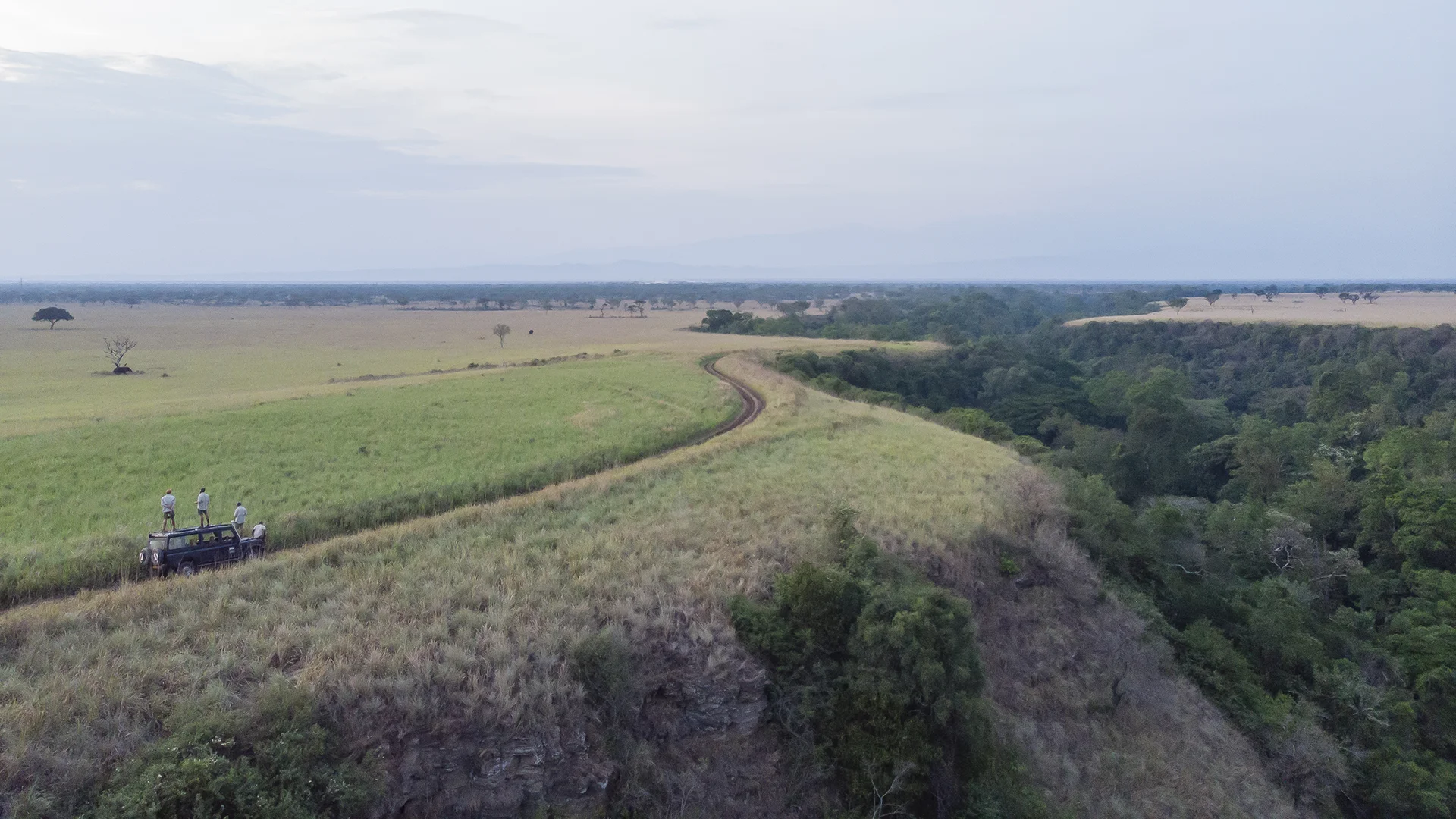
Kyambura Gorge is a steep, forested river gorge cut into the savannah of Queen Elizabeth National Park, sheltering a small, isolated chimpanzee troop known locally as the Lost Chimpanzees. Cut off from other populations by historic deforestation, this community is protected within the Kyambura Game Reserve, a buffer zone created specifically to support its survival and slow reforestation.
What to expect on the trek
Because the troop is small and ranges over a wide area, sightings here are the least reliable of Uganda's three sites, and rangers are upfront about this before you set out. The gorge itself, with its riverine forest, hippos and birdlife, makes the descent worthwhile even on the days the chimps are not found, and treks run for roughly two hours.
Kyambura essentials
Permit cost: US$100 per person (subject to annual reviews and changes), the most affordable of Uganda's three sites
Success rate: the lowest of the three, given the troop's small size and wide range
Trek duration: around two hours, with variable time spent observing any sighting
Habituation option: not offered here, unlike at Kibale and Budongo Forest currently
Nearest stay: Kyambura Gorge Lodge, perched dramatically on the edge of the gorge
Pairs naturally with: Queen Elizabeth National Park wildlife activities and boat cruises
Best months: the drier months, from June to September and December through February
Fitness needed: demanding, involving a steep descent and climb back out of the gorge
Which site suits your safari
If chimp trekking is your main event
Choose Kibale. With the largest habituated population, the longest trekking history and the highest success rate of the three sites, it is the safest choice if seeing chimpanzees clearly matters more to you than saving on permit costs. It also offers the only habituation experience with year-round availability, and pairs neatly with a wildlife-viewing stop next door in Queen Elizabeth National Park.
If you're combining chimps with gorillas
Budongo works well for travellers already routing through Murchison Falls National Park en route to or from gorilla trekking in Bwindi or Rwanda's Volcanoes National Park. Its lower permit cost and quieter trails suit those who want a genuine forest experience without adding a significant detour, and the Royal Mile offers exceptional birding as a bonus alongside the primates, particularly for keen birders travelling in the dry season.
If you want a shorter detour and lower cost
Kyambura Gorge suits travellers already based in Queen Elizabeth National Park for wildlife viewing, who want to add a chimp trek without a long drive elsewhere. Expect the lowest cost and the lowest certainty of the three, in exchange for a genuinely dramatic gorge setting, good birding, and the chance to support a fragile, isolated troop's ongoing recovery and reforestation efforts around the reserve.
Frequently asked questions
Uganda offers chimpanzee trekking at three main sites: Kibale National Park, Budongo Forest and Kyambura Gorge in Queen Elizabeth National Park. Kibale has the largest habituated population and highest success rate; Budongo offers a quieter forest with lower permit fees; Kyambura is the most affordable but has the lowest success rate, tracking a small, isolated troop. Most safari itineraries pair one of these with gorilla trekking in Bwindi.
Kibale offers the largest habituated chimpanzee population and the highest success rate of the three, at the highest permit cost. Budongo Forest is quieter and more affordable, with one habituated troop of around 100 chimps open to visitors, while two larger research communities remain closed. Kyambura Gorge is the most affordable option but the least reliable, tracking a small, isolated troop through a dramatic river gorge inside Queen Elizabeth National Park.
Kibale National Park has the highest success rate of Uganda's three main chimp trekking sites, close to 90 percent, thanks to its large chimpanzee population and nearly three decades of ongoing habituation work. Budongo's Kaniyo-Pabidi troop offers a solid success rate too, given its smaller, well-known range. Kyambura Gorge, home to a small and wide-ranging troop, carries the lowest certainty of a sighting on any given trekking day.
Permit prices vary by site and are set by the Uganda Wildlife Authority, subject to periodic revision. Kibale costs US$250 per person for foreign non-residents, Budongo Forest US$130, and Kyambura Gorge US$100. Prices differ further by season and residency status, and habituation permits cost considerably more than a standard trek. Always confirm current rates with our safari experts before booking your permit. Permit prices and availability can change.
Not currently. Kibale National Park offers a longer chimpanzee habituation experience year-round, running four to six hours alongside the park's research team as they work with a troop still being introduced to human presence. Budongo Forest also offers habituation, though permits are not issued during the July to September peak trekking season. Kyambura Gorge does not currently offer a habituation option, only the standard one-hour chimpanzee trek.
Yes, and many travellers do. Kibale and Budongo both sit within reasonable driving distance of Bwindi Impenetrable National Park, Uganda's principal gorilla trekking destination, making a combined primate itinerary straightforward for our safari experts to arrange. Kyambura Gorge, inside Queen Elizabeth National Park, also works well as an add-on for travellers already routing through the park on a wider Ugandan safari that includes gorilla trekking elsewhere.
A moderate level of fitness is recommended across all three sites, since forest trails can be steep, muddy underfoot and largely unmarked once trackers leave the main paths. Kyambura Gorge involves the steepest descent and climb of the three locations. Treks can last anywhere from thirty minutes to four hours depending on where the chimpanzees are ranging that day, so comfortable, broken-in walking shoes matter more than raw speed or endurance.
Budongo Forest is widely regarded as Uganda's standout birding location among the three chimp trekking sites, with 366 recorded species and the renowned Royal Mile trail drawing dedicated birders from around the world. Kibale also offers excellent birding within its rainforest, including the rare and much sought-after green-breasted pitta. Kyambura Gorge and the surrounding Queen Elizabeth National Park add shoebill and raptor sightings into the wider mix.
The drier months, from June to September and again from December to February, generally offer easier underfoot conditions across Kibale, Budongo and Kyambura Gorge alike. Trekking remains possible year-round at all three sites, since forest trails stay passable even during wetter periods, though rain can make the terrain considerably more physically demanding and reduce visibility when tracking a troop through dense undergrowth.
Start planning your dream safari
Our travel experts will craft a no-obligation itinerary just for you. We have crafted over 5,000 safaris since 1991. Your personal details are protected; we only use this information to contact you.
Why book your safari with us?

Deep Experience & Knowledge
Handcrafted experiential safaris since 1991.
Travel in Africa is about knowing when and where to go, and with whom. A few weeks too early/late or a few kilometres off course, and you could miss the greatest show on Earth. And wouldn’t that be a pity?

Trust & Safety

Make A Difference
We donate a portion of the revenue from every safari sold to carefully selected conservation projects that make a significant difference at ground level.
YOUR safari choice does make a difference - thank you!