

Safari experts & storytellers. Since 1991



Mikumi National Park: easily accessible from Dar es Salaam
Mikumi National Park at a glance:
Location: Morogoro Region, southern Tanzania; Tanzania's southern circuit | Access from Dar es Salaam: approximately 300 km by road; around four to five hours; or by air to Mikumi airstrip (Kikoboga) |
Size: 323,000 hectares (3,230 km²) | Best time to visit: June–October (dry season) |
Nearest international airport: Julius Nyerere International Airport, Dar es Salaam (DAR) | Minimum recommended stay: 2 nights |
Big Five: Lion, leopard, elephant and buffalo present; rhino currently absent | Malaria risk: Yes, prophylaxis recommended |
Why visit Mikumi National Park?
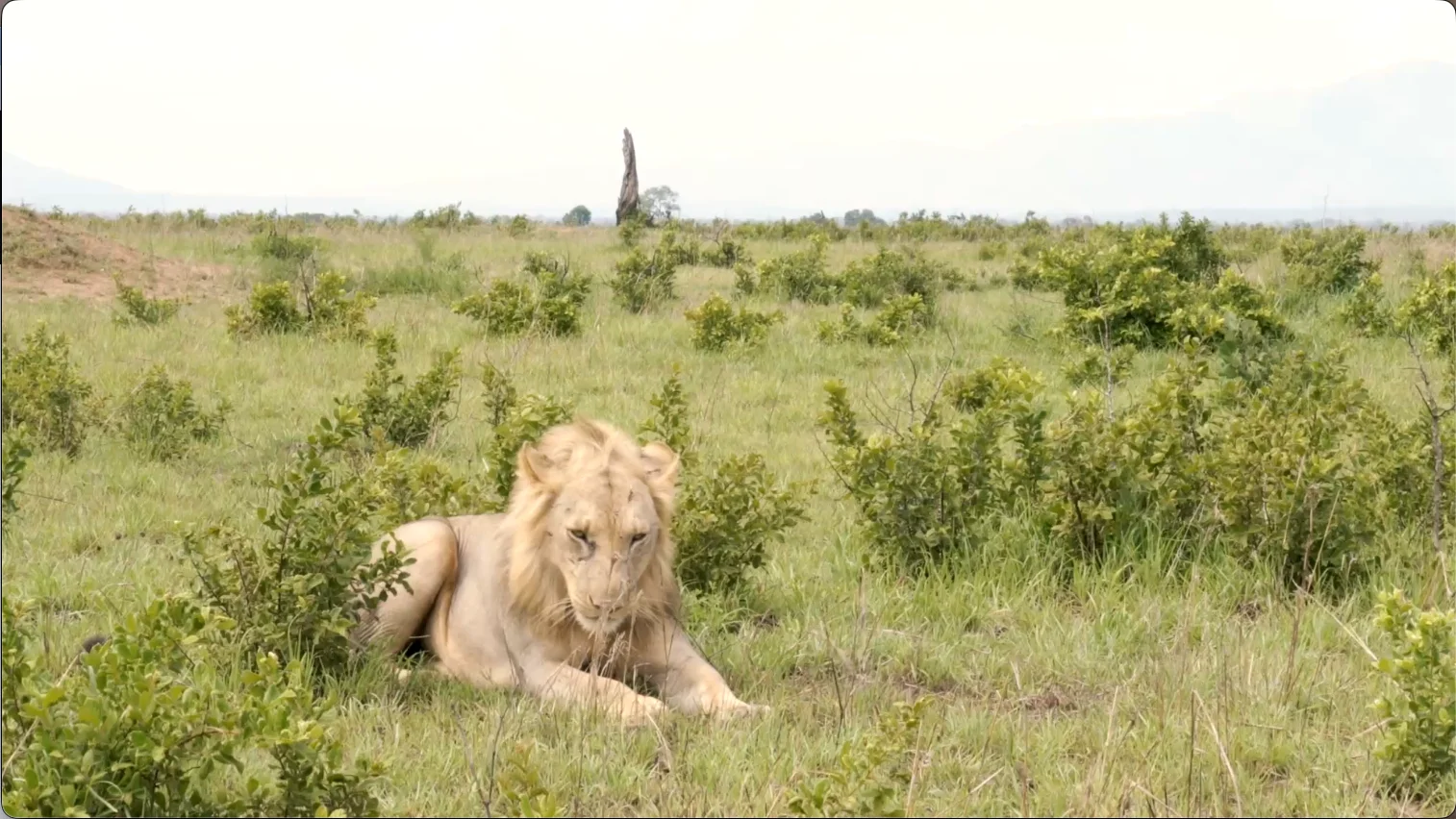
Stand on the Mkata Floodplain at first light, and it is easy to understand why Mikumi draws comparison with the Serengeti. The open grassland stretches toward a mountain horizon, giraffes move between the acacia fringe and the river, and lions survey their territory from the flattened tops of termite mounds. There is a quality of space in this landscape that rewards travellers willing to look beyond the northern circuit.
Mikumi is one of Tanzania's most accessible national parks - ideal for visitors to Dar es Salaam who don't have much time for a bush break. At approximately 300 km from Dar es Salaam on a well-surfaced tar road, it sits closer to a major international airport than almost any comparable safari destination in East Africa. This accessibility makes it a natural entry point to the southern circuit and a logical overnight stop for travellers continuing to Nyerere or Ruaha. It is also, on its own terms, a genuinely rewarding two-night destination.
Honesty matters here: the Tanzam Highway, the main tar road connecting Dar es Salaam with Nyerere, Udzungwa and on to Zambia, passes directly through the park. Around 20% of Mikumi lies north of this road, where the Mkata Floodplain wildlife-viewing circuit sits. The remaining 80% extends south into wilder, less-visited terrain. The road is a presence, but it does not define the park. For travellers who venture into the southern sector, Mikumi's wilderness character reveals itself fully.
5 reasons we love Mikumi National Park
The Mkata Floodplain: open savannah where you can find lions, elephants, buffalo and giraffes.
Close to Dar es Salaam: roughly 300 km away on a good tar road, Mikumi suits travellers with only a few days of bush time and those requiring an overnight en route to Nyerere, Ruaha or beyond.
Eland and rare antelope: the Mkata Floodplain is reliably good for eland, sable, and Lichtenstein's hartebeest.
The hippo pools: two pools north of the main gate hold resident pods year-round, surrounded by an ever-changing community of waterbirds.
400-plus bird species to get your Tanzanian list off to a great start.
All you need to know about Mikumi National Park
Things to do in Mikumi National Park
Wildlife viewing on the Mkata Floodplain: the park's principal activity; open grassland tracks are most productive at dawn and dusk when predators are on the move.
Visit the hippo pools: two pools five kilometres north of the main gate hold resident pods year-round, with herons, storks and kingfishers working the margins alongside.
Guided night drives: after dark, drives reveal nocturnal species seldom seen by day, including genets, bush babies, porcupines and spotted hyenas.
Mountain walks in the Ruhebo and Uluguru: dry-season walks climb the northern boundary, ending at Kinole waterfall and its natural plunge pool.
Birdwatching: 400-plus species across grassland, river and woodland edge; European migrants swell the count from November through April.
What wildlife can I see in Mikumi?
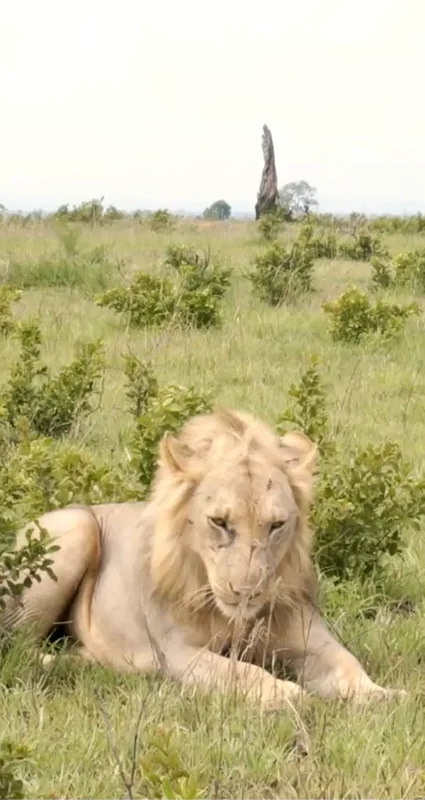
Lion and hyena: reliably seen on the Mkata Floodplain, where prides and clans gather.
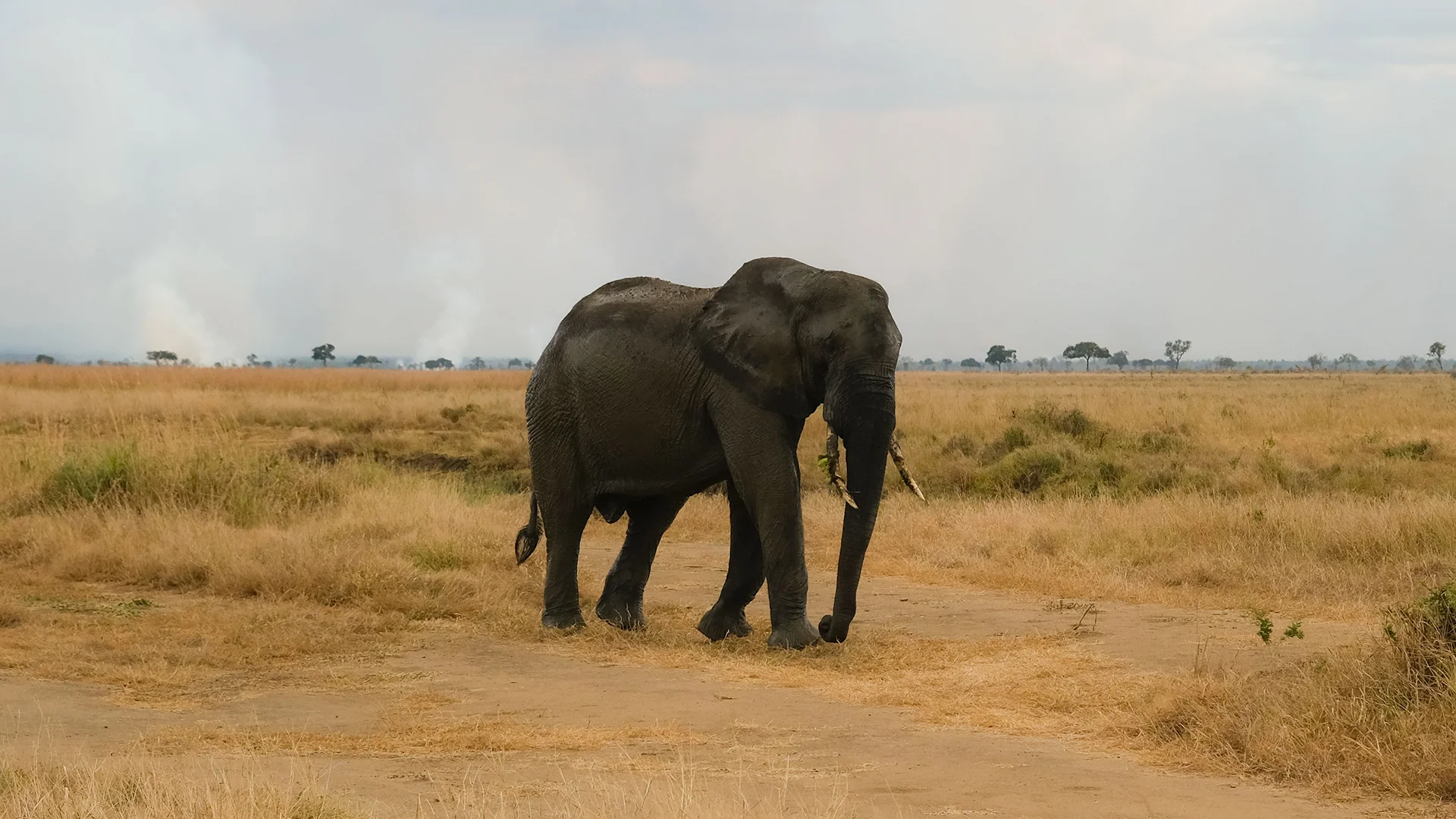
Elephant and buffalo: large elephant herds gather along the Mkata River; buffalo move in substantial groups across the open plain.
Hippopotamus: resident pods occupy two pools north of the main gate; herons, open-billed storks and kingfishers work the water margins alongside.
Eland, greater kudu and sable: the Mkata Floodplain is among Tanzania's most reliable eland locations; kudu and sable inhabit the miombo foothills.
Giraffe, zebra and wildebeest: all easily seen across the open grassland and acacia fringes of the Mkata Plain; impala and warthog are constant.
Leopard: present but seldom seen; scanning the miombo hillsides and forest margins of the southern sector offers the best chance of a sighting.
400-plus bird species, including yellow-throated longclaw, bateleur, African fish eagle, African openbill, black-bellied bustard, Dickinson’s kestrel, Böhm’s bee-eater, pale-billed hornbill, Verreaux’s eagle-owl, and racket-tailed roller.
Where to stay in Mikumi National Park
Accommodation options in Mikumi are limited, and the two principal properties sit on opposite sides of the Tanzam Highway, a detail that shapes not just their location but their entire character and the kind of safari experience each delivers.
Stanley's Kopje sits on an elevated rocky granite outcrop north of the highway, placing it alongside the Mkata Floodplain and the park's primary wildlife-viewing circuit. The setting is dramatic: wide views extend across the open plain from the kopje's natural vantage point, and the camp's position means wildlife drives begin immediately in the park's most productive area. For travellers whose priority is maximising time on the Mkata grasslands, Stanley's Kopje is the natural choice and the higher-rated property of the two.
Vuma Hills Tented Camp sits south of the highway, elevated in the Vuma Hills and overlooking the park below. The setting here is quieter and more secluded, a hilltop camp with a bush atmosphere that draws on the wilder, less-visited character of Mikumi's southern 80%. Approximately 15 minutes from the main park gate, it accesses a sector where elephants and lions range with less human traffic. For travellers who value seclusion and a more intimate camp atmosphere, Vuma Hills is the compelling choice.
Trusted by thousands of ecstatic travellers
✔️ 5-Star Trustpilot Rating ✔️ Condé Nast Travel Specialist Award Winner
✔️ Accredited by SATSA ✔️ 5,000+ Exceptional Safaris Since 1991
Why choose Africa Geographic to plan your safari?

"Africa Geographic planned our safari to Tanzania. His on the ground knowledge of Tanzania, professionalism, and responsiveness throughout the process was top notch. The trip went seamlessly. Our guide’s knowledge was excellent. We saw so much wildlife...The food was delicious. We also appreciate Africa Geographics involvement in conservation efforts..."
"I recently returned from a safari in Tanzania ,I am an 65 year female traveling solo and it was an unforgettable experience...Everything ran seamlessly. The guides were deeply in tune with their environment, and all four were highly knowledgeable birders, which greatly enriched the experience. The people I met were wonderful...I’ve already booked another trip"
"Tanzania was amazing...The 2 drivers were with us every day and were knowledgeable and good communicators. Their many years of experience and also skill in driving thru challenging rough terrain allowed us to get to great viewing spots at the right times. The food was abundant and very good quality...The hospitality was excellent everywhere we went."
Wish you were here?
Frequently asked questions
Mikumi National Park is a 323,000-hactare protected area in Tanzania's Morogoro Region, gazetted in 1964. Part of the southern circuit, it offers open savannah wildlife viewing on the Mkata Floodplain and forms part of the vast ecosystem shared with Nyerere National Park to the south.
Mikumi lies in the Morogoro Region of southern Tanzania, approximately 300 km southwest of Dar es Salaam. It sits within Tanzania's southern circuit, neighbouring the broader Nyerere ecosystem and within reach of Udzungwa Mountains, Ruaha and the coast.
June to October, the dry season, offers the most consistent wildlife viewing, when animals congregate at waterholes and the Mkata River. September and October are particularly productive. November to February brings good birding as migratory species arrive from Europe and beyond.
Most travellers drive from Dar es Salaam, approximately 300 km on a well-surfaced tar road taking around four to five hours. Mikumi also has its own airstrip at Kikoboga, served by scheduled flights routing via Dar es Salaam.
Approximately 300 km by road, around four to five hours on the Tanzam Highway. This makes Mikumi the closest major national park to Dar es Salaam and a realistic destination for a weekend safari or a first stop on a southern circuit itinerary.
Two nights is the recommended minimum, enough time for morning and evening wildlife drives, a hippo pool visit and a feel for the Mkata Floodplain. Travellers combining Mikumi with Udzungwa, Nyerere or Ruaha typically allocate two nights before continuing south.
No, four of the Big Five are present - lions, leopards, elephants and buffalo - but rhinos are currently absent. Lions, buffalo and elephants are reliably seen; leopards are present but seldom encountered. Eland, sable, and greater kudu are additional, distinctive draws.
The Mkata Floodplain is the vast open grassland at the heart of Mikumi's northern section, fed by the Mkata River. It supports lion, elephant, buffalo, eland, zebra and giraffe, and is crossed by the park's main network of wildlife-viewing tracks.
Wildlife drives across the Mkata Floodplain are the signature experience, with productive waterholes and excellent predator sightings from first light. The hippo pool visit is a near-unmissable addition, and guided night drives reveal a different cast of species after dark.
Mikumi is an excellent birding destination with more than 400 recorded species. Open-billed storks fish the Mkata River, bateleur eagles patrol the skies, and lilac-breasted rollers add colour to the grassland edges. European migratory species arrive from November through April.
Stanley's Kopje sits north of the Tanzam Highway on a granite kopje, with panoramic views over the Mkata Floodplain. Vuma Hills Tented Camp is south of the highway, elevated in the Vuma Hills, with a quieter atmosphere and access to the wilder southern sector.
Yes. Udzungwa Mountains National Park is approximately 80 km away by road. For Nyerere and Ruaha, flying is recommended over long road transfers. A typical southern circuit pairs Mikumi as a first stop with one or both of Nyerere and Ruaha.
Mikumi is well-suited to first-time visitors. Its straightforward road transfer from Dar es Salaam, accessible wildlife-viewing network on the Mkata Floodplain and varied activities, wildlife drives, hippo pools and guided walks, provide a rewarding introduction without the logistical complexity of more remote parks.
A Mikumi safari typically costs from US$285 per person, per night, depending on the accommodation comfort level, time of year and activities. This price usually includes accommodation, all meals, game drives, experienced guides, and 24/7 support from our team.
Click here to schedule a no-obligation call with one of our Safari Experts or fill in our 2-minute form with your questions. Our team of experts are here to help! Whether you’re curious about the best time to travel, want to hear first-hand about an experience or need help planning your safari.
Explore more African destinations
Start planning your dream safari
Our travel experts will craft a no-obligation itinerary just for you. We have crafted over 5,000 safaris since 1991. Your personal details are protected; we only use this information to contact you.
Why book your safari with us?

Deep Experience & Knowledge
Handcrafted experiential safaris since 1991.
Travel in Africa is about knowing when and where to go, and with whom. A few weeks too early/late or a few kilometres off course, and you could miss the greatest show on Earth. And wouldn’t that be a pity?

Trust & Safety

Make A Difference
We donate a portion of the revenue from every safari sold to carefully selected conservation projects that make a significant difference at ground level.
YOUR safari choice does make a difference - thank you!