

Safari experts & storytellers. Since 1991

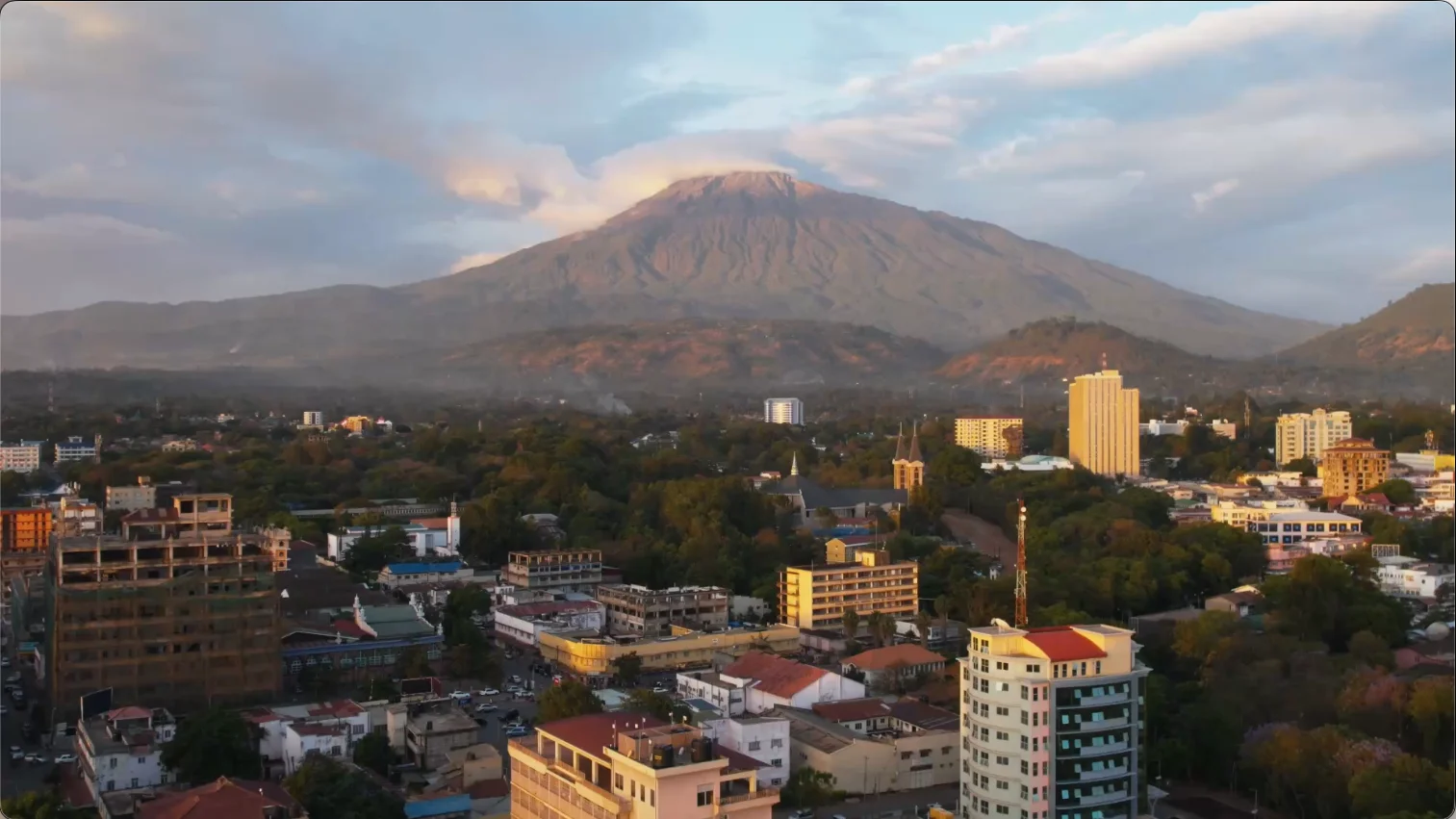
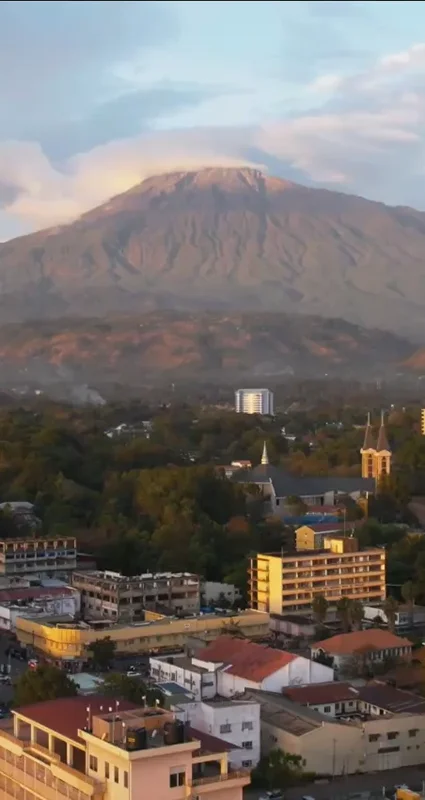


Arusha: Tanzania's safari capital
Arusha at a glance:
Location: Northern Tanzania, at the foot of Mount Meru, ~80 km west of Mount Kilimanjaro | Airports: Kilimanjaro International Airport (JRO) receives international arrivals, ~1 hour from Arusha; Arusha Airport (ARK) for domestic and bush-flight connections, ~20 minutes from town |
Altitude: ~1,400 m above sea level; mild, temperate highland climate year-round | Best time to visit: June–October (dry season, peak safari); January–February (short dry season, southern Serengeti calving) |
Currency: Tanzanian shilling (TZS); US dollars widely accepted | Malaria risk: Present throughout Tanzania - consult your doctor before travel |
Northern circuit access: Serengeti, Ngorongoro Crater, Tarangire and Lake Manyara all within reach by road or bush flight | Recommended stay: 1–2 nights as a safari base; 2–3 nights to include Arusha National Park or cultural experiences; 4+ nights for Mount Meru trekking |
Why visit Arusha?
Arusha sits at roughly 1,400 metres in the shadow of Mount Meru, where the air is cool even at midday, and the surrounding land rises through coffee estates and forested volcanic slopes. Most travellers arrive knowing one thing about the city: that it is the departure point for Tanzania's northern safari circuit. That is true, but it undersells Arusha considerably.
Within an hour of town, Arusha National Park offers vehicle game drives, guided walking safaris with an armed ranger and wildlife encounters among montane forest and open alkaline lakes. Lake Duluti, a volcanic crater lake a short drive from the city, rewards a morning of quiet paddling or a walk through the riverine forest along its bank.
The city itself has genuine cultural texture. Meaningful craft is found in Maasai women's beadwork cooperatives, disability-run workshops, and the multi-storey galleries of the Cultural Heritage Centre. Above the city, Mount Meru offers a serious multi-day summit trek through forest, moorland and volcanic terrain, with wildlife on the lower slopes and very few other trekkers.
Give the city a day beyond the itinerary, and it will give you something you didn't expect to find here.
5 Reasons We Love Arusha
The northern circuit at your doorstep: Arusha connects directly to the Serengeti, Ngorongoro Crater, Tarangire, Lake Manyara and Arusha National Park - all by road or daily bush flight.
A highland city with real character: At 1,400 metres, Arusha has a cooler, more temperate feel than the rest of Tanzania. Coffee estates on the outskirts, Mount Meru above and a city that rewards curiosity.
Walking safaris on the slopes of Mount Meru: Arusha National Park is one of the few parks in Tanzania that formally offers guided walking safaris with an armed ranger.
Craft and culture worth seeking out: Beadwork cooperatives, disability-run workshops and one of East Africa's most comprehensive art galleries make Arusha's cultural offer specific, ethical and worth the time.
Canoe safaris on the Momela Lakes: Paddling in near silence across the alkaline Momela Lakes, find flamingos on the water, forest behind, Kilimanjaro on the horizon - it is unlike anything else in northern Tanzania.
Our favourite Arusha safari ideas
All you need to know about Arusha
Things to do in Arusha
Tour a working coffee estate: Walk arabica rows in Arusha's highland growing region, follow the bean from cherry to cup and taste locally grown coffee in the plantation gardens.
Explore Arusha National Park: Under an hour from town, the park offers game drives, guided walking safaris with an armed ranger and canoe trips on the Momela Lakes.
Canoe and walk at Lake Duluti: Paddle a volcanic crater lake 20 minutes from Arusha, watching kingfishers work the reeds, or follow a quiet forest trail along the water's edge.
Trek Mount Meru: Tanzania's second-highest peak rewards a three-to-four-day guided hike through forest, volcanic moorland, and crater terrain, with wildlife on the lower slopes.
Visit the Cultural Heritage Centre: A multi-storey gallery with one of East Africa's largest art collections. Search for Tanzanian carvings, Maasai jewellery, bronze sculptures and the Jane Goodall Tribute Centre.
Sidai Designs and the Maasai market: Sidai Designs channels Maasai women's craft into contemporary beadwork jewellery; the nearby Maasai market offers textiles, art and curios at negotiated prices.
What wildlife can I see in Arusha?
Wildlife viewing in Arusha centres on Arusha National Park on the slopes of Mount Meru, where the range of habitats supports a rewarding mix of species. Lions and rhinos are not present.
Commonly seen species include elephant, buffalo, hippo, giraffe, waterbuck and zebra: The most consistently seen species in the park, particularly around the Momela Lakes, where herds move through open grassland at the water's edge.
Black-and-white colobus monkey: The Kilimanjaro colobus is the park's flagship primate, found here and on Kilimanjaro itself - frequently encountered in the montane forest canopy.
Leopard and spotted hyena: Both are present in the park, particularly in the forested areas around Mount Meru, but sightings are elusive and should not be expected.
Flamingos on the Momela Lakes: Alkaline conditions draw lesser flamingos to feed in the shallows; on clear days Mount Kilimanjaro forms a striking backdrop behind the pink flocks.
Nearly 400 bird species, including Hartlaub’s turaco, narina trogon, bar-tailed trogon, silvery-cheeked hornbill, grey crowned crane, broad-ringed white-eye, Kenrick’s starling, crowned eagle, Eastern bronze-naped pigeon and white-eared barbet.
Where to stay in Arusha?
Elewana Arusha Coffee Lodge sits on a 40-hectare arabica estate close to Arusha Airport. Thirty cottages in colonial plantation style - wooden floors, open fireplaces, a spa - surround the estate's working coffee trees. The Shanga workshop employs artisans with disabilities; the kitchen draws a regular local lunch crowd, which says something about the food.
Katambuga House offers eight rooms around tropical gardens where Jacaranda trees and birdsong define the mornings. The name translates roughly as "cut the bush" in Swahili. Guests consistently remember the food most: imaginative three-course dinners made from fresh local produce.
Koroi Forest Camp is the only property inside Arusha National Park, on Mount Meru's lower slopes at 1,675 metres. Eight tented chalets and a treehouse connect by raised wooden walkways through montane forest. The name comes from the Maasai word for the colobus monkeys overhead. Walking safaris, birding, canoe safaris, night drives and the Meru Crater hike are all available from camp.
Rivertrees Country Inn sits on the Usa River halfway between Kilimanjaro International Airport and Arusha - around 30 minutes from each. Thirty-four rooms spread through gardens where colobus and sykes monkeys move through the trees. Activities include horse riding, mountain biking, canoeing, village walks and coffee tours; the River Cottages and River House are the standout room options.
Arusha National Park
Arusha National Park covers 552 km² at the foot of Mount Meru, rising from 1,700 metres at the park entrance through montane rainforest, open grassland and volcanic moorland to the summit crater at 4,566 metres. It is one of northern Tanzania's most underrated and undervisited protected areas: compact, varied and accessible enough for a half-day excursion from the city, yet rewarding enough to anchor two or three nights inside the park itself.
The park divides into three distinct zones, each with its own atmosphere.
Ngurdoto Crater is an extinct volcano whose forested walls drop 400 metres to a wildlife-rich floor closed to visitors. Often described as a smaller-scale Ngorongoro, though the two landscapes are entirely different in character.
The Momela Lakes are a series of shallow, alkaline bodies of water, each with a slightly different mineral composition that shifts the colour of the surface and shapes what lives in it. Flamingos, pelicans and a wide variety of waterbirds gather here in numbers, and on cloudless mornings Mount Kilimanjaro rises above the far shore.
Mount Meru hosts dense montane forest giving way to heath moorland and, higher up, the bare volcanic rock of the summit crater.
As a formally gazetted national park, Arusha National Park sits under Tanzania's national park protection framework, and that status is evident in the quality of the habitats. The montane forest is intact, the lake systems function as they should, and the wildlife occupies a landscape that has not been converted to other uses. What makes the park particularly distinctive within the Tanzania context is its activity range. Vehicle game drives operate throughout, but it is one of a small number of parks in Tanzania where guided walking safaris with an armed ranger are formally permitted. This changes the quality of the encounter in ways a vehicle cannot replicate: tracks, birdsong and the small details that blur past from a seat come into focus on foot. Canoe safaris on the Momela Lakes offer a water-level perspective on the birdlife and open grassland. Mountain biking is available, and a half-day crater hike follows the rim of Meru Crater with views down into the volcanic bowl. For those with more time, the full Mount Meru summit ascent takes four days, moving through each of the park's habitat zones in turn.
The park's mild climate - daytime temperatures typically ranging from 18°C to 23°C - makes it comfortable year-round, though early morning game drives in the dry season call for warm layers at altitude. Wildlife viewing is strongest in the dry months of June to October, when vegetation thins and animals concentrate around permanent water. Birding is consistently excellent year-round, peaking between November and April when migratory species join the park's nearly 400 resident bird species.
Trusted by thousands of ecstatic travellers
✔️ 5-Star Trustpilot Rating ✔️ Condé Nast Travel Specialist Award Winner
✔️ Accredited by SATSA ✔️ 5,000+ Exceptional Safaris Since 1991
Why choose Africa Geographic to plan your safari?

"Planning this trip...was a great experience, he was very patient and professional as we worked through options before finalising our 22 night adventure...trip was seemless, with so many amazing experiences...Koroi Forest Lodge in Arusha National Park Tanzania for Colobus & Blue monkeys plus amazing birds...We highly recommend...AG"
"We had an initial discussion with the agent...and he responded with a very well done preliminary itinerary...he made a few tweaks to meet our preferences and that became our final trip. It was a fantastic plan. We really enjoyed each of our three different accomodations; each was outstanding but unique in their own way...We highly recommend..."
"...had an absolutely incredible experience traveling through...Tanzania with Africa Geographic. From start to finish, everything was seamless and so thoughtfully planned...made sure every detail of the trip was perfect and exactly what I envisioned...I couldn’t have asked for a better trip or team to plan it. I would absolutely recommend Africa Geographic..."
Wish you were here?
Arusha's history
Arusha has a fascinating history that speaks to the ongoing battle between local people and those who benefit from commercialisation of land and naturual resources.
In 1896, after the killing of two missionaries on Mount Meru, Captain Kurt Johannes led a German military force, allied with members of the Chagga tribe who had previously been partners of the Arusha people, through a fortnight of punitive operations that burned homes, seized cattle and broke apart the mountain communities. Three years later, Johannes ordered the survivors to build him a fort at the heart of their own territory. Spears became digging tools and shields became wheelbarrows. The Boma was completed in 1901. It later served as a barracks, a prison, and a government office; today it houses Arusha's Natural History Museum. The town grew outward from this structure.
The land question never closed. In 1951, the colonial administration evicted nearly 3,000 Meru farming families from Engare Nanyuki and Leguruki to consolidate a block of European-owned holdings between Mount Meru and Kilimanjaro; land the community had already purchased back from European settlers once before. Their cattle, goats, donkeys and chickens were driven out. The Meru organised: they elected a paramount chief and sent Kirilo Japhet to New York alongside the lawyer Earle Seaton. Japhet became the first Tanzanian to address the United Nations General Assembly, and he spoke in Kiswahili. The UN Trusteeship Council rebuked the British administration but upheld the eviction regardless. But the case travelled: Japhet toured Tanganyika afterwards, and what had begun as a local land grievance sharpened into one of the strongest arguments for independence. The community eventually recovered Ngare Nanyuki through a coffee cooperative.
Sixteen years later, Julius Nyerere chose Arusha for his Declaration on collective ownership and self-reliance. The Rwandan peace talks took place here in 1993, and the Burundian accords in 2000. The International Criminal Tribunal for Rwanda sat in the city for around two decades. A city founded on a land seizure became the address where other people's land and power disputes were arbitrated. That is not a coincidence; it is continuity.
Frequently asked questions
Arusha is worth considerably more time than most itineraries allow. One night serves the logistics; two nights opens up Arusha National Park, a coffee estate morning or an afternoon on Lake Duluti. Travellers who give the city more time consistently find the combination of highland atmosphere, national park access and cultural depth more rewarding than the transit reputation suggests. The best itineraries treat Arusha as a destination in its own right rather than a holding pattern between flights.
Arusha's highland altitude means the climate is mild year-round, but the wider northern circuit has a clear seasonal rhythm. June to October is the main dry season - the most popular period for Tanzania safaris, with clearer skies and stronger wildlife viewing across all the northern parks. January to February is a shorter, drier window that aligns with the wildebeest calving season in the southern Serengeti - a compelling reason to use Arusha as a base for that particular combination. November and December bring variable short rains: still worth visiting, with good birding and fewer visitors in some areas. March to May, the long rainy season, is the least suitable period for most northern circuit combinations.
Most international visitors arrive via Kilimanjaro International Airport (JRO), located approximately 40 kilometres east of Arusha, with a road transfer of around one hour depending on traffic. KIA is well connected internationally and handles the majority of visitor arrivals into northern Tanzania. Arusha Airport (ARK), on the western edge of the city, is approximately 20 minutes from the town centre and handles domestic flights as well as daily bush-flight connections to Serengeti airstrips, Tarangire, Lake Manyara and other northern circuit destinations. The right arrival airport depends on your wider itinerary.
Yes, most nationalities need a visa to enter Tanzania. An East African Tourist Visa, which covers Kenya, Uganda and Tanzania in a single permit, is also available and suits travellers combining the northern circuit with other East African destinations. Visa requirements and processing times vary by nationality; check with your nearest Tanzanian embassy or high commission well in advance of travel. Your Africa Geographic Travel specialist can advise on current requirements for your passport.
The northern circuit is the collection of protected areas most commonly combined on a Tanzania safari: Serengeti National Park, the Ngorongoro Conservation Area (including the Ngorongoro Crater), Tarangire National Park, Lake Manyara National Park and Arusha National Park. Together they form one of the most celebrated wildlife landscapes in East Africa, supporting the annual wildebeest and zebra migration, resident populations of the Big Five and a year-round calendar of wildlife events. All are accessed from Arusha by road or bush flight, making the city the natural hub for planning and logistics.
Arusha National Park is a 552 km² protected area on the slopes of Mount Meru, less than an hour from the city centre. It divides into three zones: the forested Ngurdoto Crater (an extinct volcano with a wildlife-rich floor), the alkaline Momela Lakes (productive for waterbirds and seasonally visited by flamingos), and the slopes of Mount Meru itself, rising from rainforest through moorland to the summit crater. It is one of the few parks in Tanzania where guided walking safaris with an armed ranger are formally offered, and canoe safaris on the Momela Lakes add a distinctive water-level dimension to the experience.
The park is not a Big Five destination - lion and rhino are absent - but it offers consistently rewarding wildlife viewing across a varied landscape. Giraffe, buffalo and zebra are reliably seen, particularly around the Momela Lakes. The black-and-white Kilimanjaro colobus monkey, a subspecies found here and on Kilimanjaro itself, is the park's flagship primate. Hippos occupy the wetland zones; waterbuck range the lake margins; reedbuck and bushbuck favour the forest. Leopards and spotted hyenas occur in the more remote forested areas but are rarely seen. Flamingos gather seasonally at the Momela Lakes. Nearly 400 bird species have been recorded, making the park one of northern Tanzania's stronger birding destinations year-round.
Yes. The Mount Meru summit is typically approached on a three-to-four-day guided ascent that begins inside Arusha National Park and moves through montane forest, heath moorland and the volcanic crater rim to the summit at 4,566 metres. You may encounter wildlife, including buffalo and elephants, on the lower forest routes. The trek requires reasonable fitness and experience with sustained uphill walking over multiple days. Many trekkers use Meru as acclimatisation before Kilimanjaro, but it is a rewarding independent objective with significantly fewer people on the trails. Conditions are best from June to February; avoid the long rains from March to May.
Yes, malaria is present throughout Tanzania, including Arusha and Arusha National Park. The city's altitude does not eliminate the risk. Consult your doctor or travel health clinic well before departure to discuss antimalarial medication appropriate for your health profile. Standard precautions apply: use insect repellent, wear long sleeves and trousers particularly at dawn and dusk, and sleep under a mosquito net where provided. Comprehensive travel and medical insurance is essential for any trip to Tanzania.
One night is the practical minimum for a smooth safari connection. Two nights allows a visit to Arusha National Park, a coffee estate morning or an afternoon at Lake Duluti. Three or more nights suits travellers combining the national park with cultural visits - the Cultural Heritage Centre, Sidai Designs, the Maasai market - or using Arusha as a deliberate highland pause between more intensive safari segments. Koroi Forest Camp, inside Arusha National Park, recommends a minimum two-night stay to make full use of the activity programme.
The Cultural Heritage Centre is the most comprehensive single destination: a multi-storey gallery housing Tanzanian art, sculpture, traditional carving and Maasai jewellery, alongside the Jane Goodall Tribute Centre. Sidai Designs, a cooperative run by Maasai women, produces intricate beadwork jewellery inspired by traditional design; workshops are open to visitors and beading sessions can be arranged. Shanga, based at Elewana Arusha Coffee Lodge, employs artisans with disabilities to create handmade jewellery, glass and craft. The Maasai market offers a more informal trading environment for textiles, curios and locally made goods. Community-led village visits and local market tours can be arranged through lodges and specialist operators.
The Arusha Declaration was a landmark policy statement issued by President Julius Nyerere in February 1967, outlining Tanzania's commitment to socialism, collective ownership of the means of production, and African self-reliance. Nyerere chose Arusha for the announcement, and the declaration shaped Tanzania's domestic policy for decades. The Arusha Declaration Monument remains in the city today. The declaration is one chapter in a longer arc of political significance that runs through Arusha's story - from a contested land case at the United Nations to the peace talks and tribunal that came after.
Yes, and it has an unusual history. The city's founding structure, the Boma, was completed in 1901 by the community it had been built to subordinate: German colonial forces ordered survivors of punitive military operations to construct the fort using their own tools. In 1951, nearly 3,000 Meru farming families were evicted from their land; their representative, Kirilo Japhet, became the first Tanzanian to address the United Nations General Assembly, speaking in Kiswahili. The Arusha Declaration followed in 1967. Then the Rwandan peace talks, the Burundian accords and the International Criminal Tribunal for Rwanda. A city established through dispossession became one of Africa's most significant sites of diplomatic and judicial resolution. The history section of this page tells the full story.
Accommodation in the Arusha area typically costs from US110 per person, per night, depending on the comfort level, time of year, and activities. This price usually includes accommodation, all meals, game drives, experienced guides, and 24/7 support from our team.
Click here to schedule a no-obligation call with one of our Safari Experts or fill in our 2-minute form with your questions. Our team of experts are here to help! Whether you’re curious about the best time to travel, want to hear first-hand about an experience or need help planning your safari.
Explore more African destinations
Start planning your dream safari
Our travel experts will craft a no-obligation itinerary just for you. We have crafted over 5,000 safaris since 1991. Your personal details are protected; we only use this information to contact you.
Why book your safari with us?

Deep Experience & Knowledge
Handcrafted experiential safaris since 1991.
Travel in Africa is about knowing when and where to go, and with whom. A few weeks too early/late or a few kilometres off course, and you could miss the greatest show on Earth. And wouldn’t that be a pity?

Trust & Safety

Make A Difference
We donate a portion of the revenue from every safari sold to carefully selected conservation projects that make a significant difference at ground level.
YOUR safari choice does make a difference - thank you!