

Safari experts & storytellers. Since 1991



Lapalala Wilderness Reserve: Malaria-free Big 5 safaris in the Waterberg
Lapalala Wilderness Reserve at a glance:
Location: Waterberg, Limpopo Province, South Africa | Malaria risk: Malaria-free |
Size: 48,000 hectares | Wildlife: 60+ mammal species; 280+ bird species |
Best time to visit: Year-round; May–September for dry-season conditions | Energy: Off-grid, sustainable energy systems |
Why visit Lapalala Wilderness Reserve?
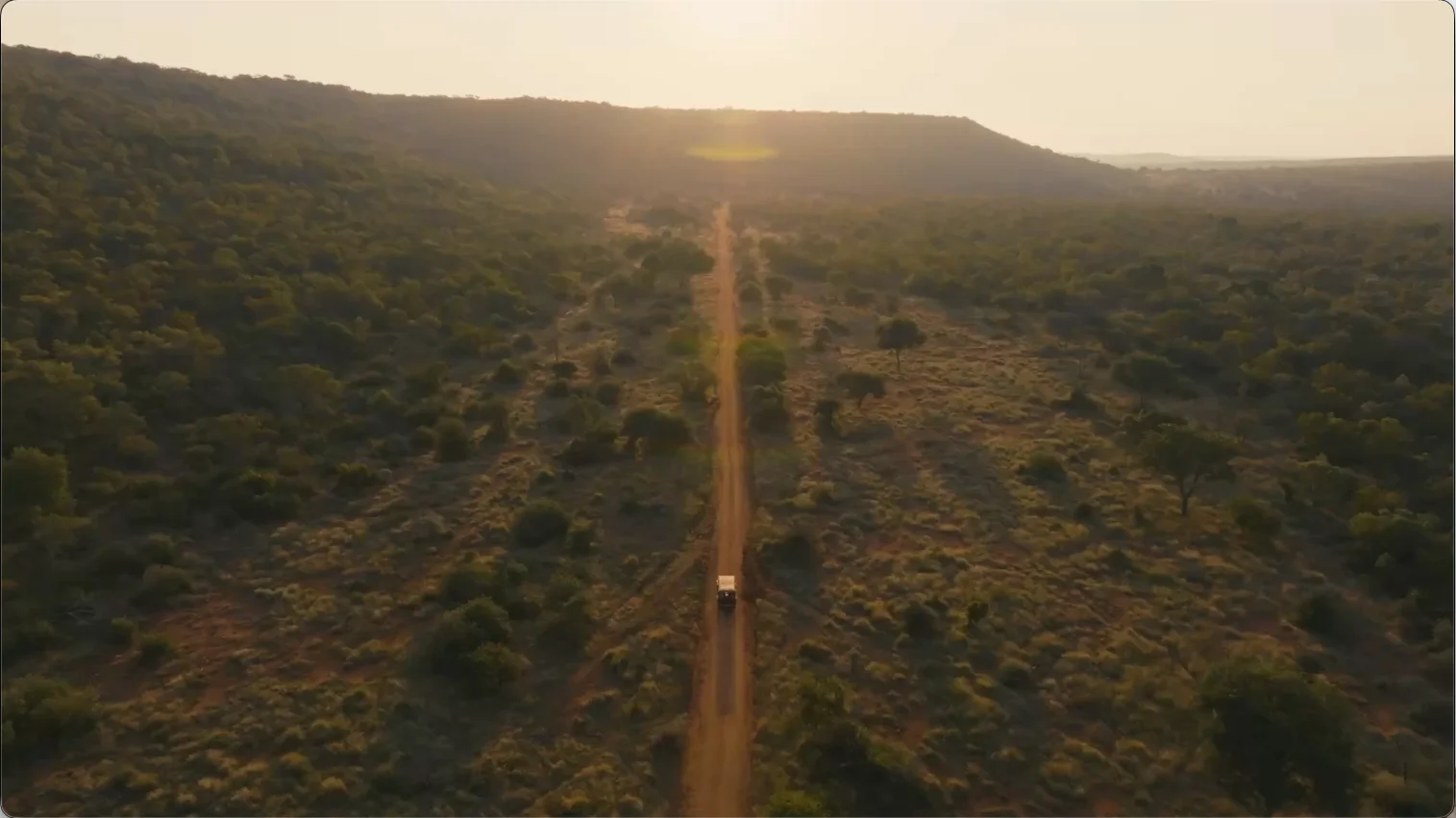
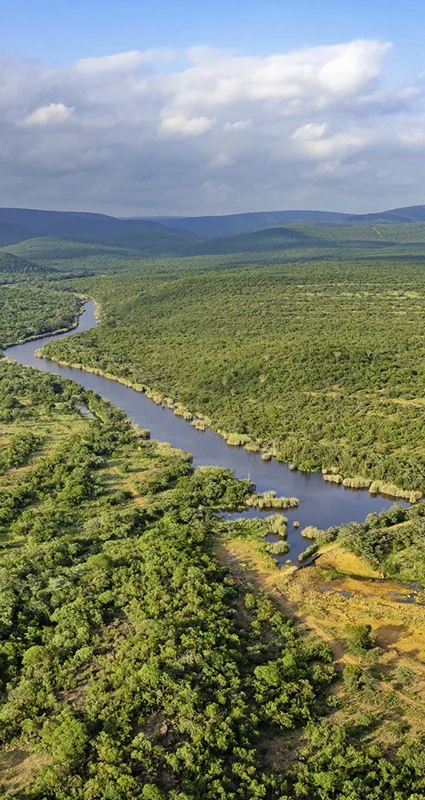
Lapalala Wilderness Reserve occupies 48,000 hectares of ancient sandstone terrain in the Waterberg - one of South Africa's most ecologically significant and least-visited wilderness regions. Set in Limpopo Province, it is the largest private protected area within the Waterberg Biosphere Reserve, a UNESCO-designated landscape of exceptional habitat diversity stretching across 654,033 hectares of the northern Limpopo plateau.
What separates Lapalala from many of South Africa's better-known safari destinations is the quality of its solitude. This is not a high-traffic reserve. Consistently recognised as one of the lowest people-density Big 5 wildlife destinations in southern Africa, it offers wildlife encounters defined by genuine space and quiet. Lions, elephants, leopards, buffalo, and both black and white rhinoceroses move through a landscape of sandstone ridges, perennial rivers, and eight distinct land types, and the unhurried nature of each encounter is as much a part of the experience as the wildlife itself.
For families with young children, or travellers who cannot visit malaria-risk areas, Lapalala's malaria-free status opens access to a full Big 5 safari without the health precautions required elsewhere. The reserve is also home to South Africa's only off-grid Vulture Safe Zone, a pangolin rescue centre, a dedicated breeding programme for roan antelope and a conservation legacy built on private rhinoceros protection stretching back over forty years.
5 reasons we love Lapalala Wilderness Reserve
Malaria-free Big 5: One of the few Big 5 reserves in South Africa that is entirely malaria-free, with exceptional wildlife access for families and those who can't take antimalarial medication.
South Africa's black rhino pioneer: In 1990, Lapalala became the first private reserve in South Africa to hold black rhinoceros and remains one of the country's most significant private rhino sanctuaries.
Solitude as a safari asset: Recognised as one of the lowest people-density Big 5 destinations in southern Africa, Lapalala offers a quality of wilderness quiet that high-volume reserves cannot replicate.
Biodiversity across eight habitat types: Eight distinct land types support 60+ mammal species and 280+ bird species - including South Africa's only off-grid Vulture Safe Zone.
A conservation education legacy: More than 140,000 young South Africans have passed through the Lapalala Wilderness School's environmental programmes, a legacy that extends well beyond the reserve's boundaries.
All you need to know about Lapalala
Things to do in Lapalala Wilderness Reserve
Game drives: Open-vehicle drives through eight distinct habitats bring Lapalala's Big 5 into proximity. Lions, elephants, leopards, buffalo and both black and white rhinos are regularly encountered.
Guided walking safaris: Expert rangers lead guests on foot through sandstone ridges and riverine vegetation, bringing the finer details of the Waterberg ecosystem to life at ground level.
Rhino monitoring and conservation experiences: Guests and conservation volunteers can participate directly in the monitoring programme that has safeguarded black and white rhinoceros at Lapalala for over forty years.
Birding: With 280+ recorded species and South Africa's only off-grid Vulture Safe Zone, Lapalala rewards birders across sandstone, riverine and thornveld habitats.
Palala River exploration: The reserve's perennial river system opens a different dimension of the Waterberg landscape, with guided riverine walks along the floodplain habitats bordering the water.
Lapalala Wilderness School programmes: Visitors can engage with the environmental education initiative that has brought more than 140,000 young South Africans into direct contact with the natural world.
Visit the Pangolarium, a specialised veterinary treatment, rehabilitation, and research facility that cares for Temminck’s pangolins rescued from the illegal wildlife trade.
What wildlife can I see in Lapalala?
The Big 5 - with a rhino legacy: Lapalala holds free-roaming elephants, lions, leopards, buffalo and both black and white rhinos. It became South Africa's first private black rhino sanctuary in 1990.
Roan and sable antelope: Roan antelope have been the focus of a dedicated breeding programme since 2010.
Large carnivores: Alongside lions and leopards, Lapalala supports cheetahs, wild dogs, spotted hyenas, and brown hyenas.
Pangolin: The world's most trafficked mammal finds sanctuary at Lapalala, whose conservation work with this elusive species is the subject of a Netflix documentary filmed here.
280+ bird species, including African fish eagle, white-backed vulture, martial eagle and Wahlberg’s eagles, secretarybird, African paradise-flycatcher, African finfoot, narina trogon and 9 kingfisher species.
Pangolin Kulu's journey
Deep in Lapalala Wilderness, a baby pangolin named Kulu was rescued from the illegal wildlife trade and given a second chance at life; a story that became the subject of a Netflix documentary bringing global attention to the world's most trafficked mammal.
'Pangolin Kulu's Journey' is a collaboration between Netflix, the Sea Change Project, Lapalala Wilderness, Academy Award-winning filmmaker Pippa Ehrlich - known for My Octopus Teacher - and cinematographer Gareth Thomas. Through intimate footage gathered inside the reserve, the film follows Kulu's rehabilitation and places audiences inside one of conservation's most pressing battles.
Pangolins are the most poached animal on Earth, and under immense pressure. Kulu's story, set against a landscape shaped by decades of conservation commitment, gives that global crisis a face - and a home.
Where to stay in Lapalala Wilderness Reserve
Lapalala's two lodges serve different travellers and offer distinctly different experiences of the reserve.
Noka Camp rests on a clifftop 100 feet above the winding Palala River with sweeping views across the valley and zero light pollution overhead. Four Villa Suites each offer private plunge pools and contemporary interiors, while a dedicated Family Villa provides two bedrooms, generous living areas and its own plunge pool. The defining experience is the sky bed - guests can choose to sleep outside beneath the Waterberg night sky, or retreat indoors, a detail that gives Noka Camp a character unlike most lodges in the region.
Melote House is an exclusive-use villa designed for groups seeking complete privacy. The main house, arranged across three tiers, accommodates up to 12 guests; a separate adjacent cottage sleeps a further four, giving families or friend groups the option of 16 places together. Every element connects guests to their surroundings. The bedroom suites are calm and elegant, while the living areas draw their colour palette from the birdlife in the gardens around the house. Melote House functions less like a conventional safari lodge than a carefully curated private home set inside the bush, with the warmth and flexibility that implies.
Lapalala's history
The story of Lapalala Wilderness begins with a view. In May 1981, artist and conservationist Clive Walker brought farmer, businessman and conservationist Dale Parker to inspect a hunting reserve in the Palala River Valley.
Standing above the valley, Parker immediately grasped what the land could become. Over the following two decades, he methodically acquired 17 additional farms totalling 36,000 hectares around his original purchase - Lapalala Wilderness had taken shape as a coherent conservation landscape in the heart of the Waterberg.
The milestones came with lasting consequences. In 1990, Lapalala became the first private reserve in South Africa to hold black rhinos, acquiring five animals from the Natal Parks Board, a decision that placed the reserve at the forefront of private rhino conservation for a generation. Clive Walker was also instrumental in securing UNESCO Biosphere Reserve status for the Waterberg, the first such designation in northern South Africa.
When Dale Parker died unexpectedly in 2001, his son Duncan Parker assumed responsibility for the reserve, partnering with neighbouring landowner Gianni Ravazzotti to shape its future and expand the reserve to 48,000 hectares. The Lapalala Wilderness Foundation NPC now manages the reserve, carrying forward a founding conviction: that conserving wildlife depends on preserving habitat at scale, and that people must always remain part of that story.
Trusted by thousands of ecstatic travellers
✔️ 5-Star Trustpilot Rating ✔️ Condé Nast Travel Specialist Award Winner
✔️ Accredited by SATSA ✔️ 5,000+ Exceptional Safaris Since 1991
Why choose Africa Geographic to plan your safari?

"As a bucket list trip this did not disappoint. Africa Geographic staff planned an amazing South African adventure to help me see as many small mammal species as were willing to show themselves during my visit...Every step worked without a hitch, much to my amazement...A trip I will never forget, with a company I would highly recommend!"

"Our family holiday to...South Africa, organized by Africa Geographic, was nothing short of extraordinary...attentive, professional, and genuinely passionate about crafting an experience that perfectly suited our family...It was a journey filled with awe, laughter, and lifelong memories — one our family will cherish forever."

"...did an outstanding job organizing an unforgettable trip for my family and me to South Africa...We enjoyed two incredible safaris over the course of eight nights, which struck the perfect balance between family-friendly (ideal for our kids, ages 10 and 11) ...I recommend...for anyone looking to explore South Africa in a truly memorable way."
Wish you were here?
Frequently asked questions
Lapalala Wilderness Reserve is a 48,000-hectare Big 5 wildlife reserve in the Waterberg, Limpopo Province, South Africa. It is the largest private protected area within the UNESCO-recognised Waterberg Biosphere Reserve and is entirely malaria-free.
Yes - entirely. Lapalala is one of the few Big 5 reserves in South Africa with no malaria risk, making it accessible to families with young children and travellers who cannot take antimalarial medication.
The Waterberg Biosphere Reserve is a UNESCO-designated conservation landscape covering 654,033 hectares of Limpopo Province. Lapalala Wilderness Reserve is the largest private protected area within it, and played a central role in securing the biosphere's original UNESCO designation.
Lapalala supports free-roaming elephant, lion, leopard, buffalo and both black and white rhinoceros. The reserve also holds cheetah, wild dog (painted wolves), spotted hyena, brown hyena, roan antelope, sable antelope and more than 280 bird species.
Lapalala is a year-round destination. May to September - the dry Waterberg winter - brings cooler temperatures and excellent wildlife visibility as animals concentrate around permanent water. October to April delivers summer rainfall, lush landscapes and exceptional birding.
Lapalala is located approximately 50 kilometres north-east of Vaalwater in Limpopo Province and is accessible by road from Johannesburg. Contact your safari consultant for current transfer and fly-in options available at the time of booking.
In 1990, Lapalala became the first private reserve in South Africa to hold black rhinoceros, acquiring five animals from the Natal Parks Board. Both black and white rhinoceros are actively monitored and protected today through a dedicated on-reserve programme.
The Lapalala Wilderness School is an environmental education programme operating within the reserve. More than 140,000 young South Africans have passed through its programmes, and it has inspired many who now work professionally in conservation and ecotourism.
Farmer, businessman, and conservationist Dale Parker founded Lapalala, with the vision and encouragement of artist and conservationist Clive Walker. The founding moment came in May 1981, when both men overlooked the Palala River Valley and recognised its potential as a major conservation area.
Pangolin Kulu's Journey is a Netflix documentary filmed at Lapalala Wilderness that follows the rescue and rehabilitation of Kulu, a baby pangolin recovered from the illegal wildlife trade. It was directed by Academy Award-winning filmmaker Pippa Ehrlich, known for My Octopus Teacher.
Lapalala has two lodges. Melote House is an exclusive-use property for up to 16 guests, suited to private groups and families. Noka Camp is a clifftop lodge above the Palala River with four Villa Suites, a Family Villa and a sky bed experience.
Yes, directly. The reserve is managed by the Lapalala Wilderness Foundation NPC and funds active rhinoceros, roan antelope and buffalo conservation programmes, operates South Africa's only off-grid Vulture Safe Zone, and supports the Lapalala Wilderness School's environmental education work.
More than 280 bird species have been recorded at Lapalala Wilderness Reserve, supported by eight distinct habitat types including sandstone ridges, riverine forest, thornveld and wetlands. The reserve is also home to South Africa's only off-grid Vulture Safe Zone.
Lapalala safaris typically cost from R20,000 per person, per night, depending on the accommodation comfort level, time of year and activities. This price usually includes accommodation, all meals, game drives, experienced guides, and 24/7 support from our team.
Click here to schedule a no-obligation call with one of our Safari Experts or fill in our 2-minute form with your questions. Our team of experts are here to help! Whether you’re curious about the best time to travel, want to hear first-hand about an experience or need help planning your safari.
Explore more African destinations
Start planning your dream safari
Our travel experts will craft a no-obligation itinerary just for you. We have crafted over 5,000 safaris since 1991. Your personal details are protected; we only use this information to contact you.
Why book your safari with us?

Deep Experience & Knowledge
Handcrafted experiential safaris since 1991.
Travel in Africa is about knowing when and where to go, and with whom. A few weeks too early/late or a few kilometres off course, and you could miss the greatest show on Earth. And wouldn’t that be a pity?

Trust & Safety

Make A Difference
We donate a portion of the revenue from every safari sold to carefully selected conservation projects that make a significant difference at ground level.
YOUR safari choice does make a difference - thank you!