

Safari experts & storytellers. Since 1991


Trust us to find you the rarest animals, the most spectacular wildlife events, the remotest landscapes and deeply meaningful cultural encounters!
When to visit the Greater Kruger: a month-by-month guide
Greater Kruger is one of the few places on Earth where you can plan a safari for any month of the year and expect a genuinely rewarding experience. The ecosystem – roughly 2 million hectares of interconnected national park and private reserves – supports over 147 mammal species and over 500 bird species, with wildlife activity driven by rainfall, temperature, and the annual cycle of the African bush rather than any single peak season.
The question is not whether Greater Kruger will deliver. It will. The question is what kind of safari you want – and that depends almost entirely on when you go.
Quick reference – Greater Kruger by season
Season | Months | Wildlife viewing | Best for |
Dry season | May – October | Excellent – peak visibility | Big 5, predators, walking safaris |
Early wet | November – December | Good – lush and active | Birding, newborn animals, lower prices |
Midsummer | January – February | Good – dense vegetation | Photography, green-season value |
Late wet | March – April | Good to very good – improving as vegetation thins | Predator activity, fewer visitors |
Greater Kruger safaris we love
Greater Kruger's private reserves deliver some of Africa's most consistent wildlife encounters year-round – unfenced ecosystems, expert guiding, and lodges that combine comfort with genuine bush immersion. Here are three Africa Geographic safaris to consider:
MalaMala and Mashatu Big 5 safari: Ten days combining the legendary wildlife of MalaMala – where leopard sightings are a near-daily occurrence – with Mashatu's baobab landscapes and the Blyde River Canyon. Explore this classic Big 5 journey →
Classic Big 5 safari in South Africa: Nine days in Timbavati and Madikwe – two of South Africa's top Big 5 reserves – with expert guides, charter flights, and superb lodge hospitality. View this South Africa itinerary →
Timbavati, Victoria Falls and Chobe: Combine a Timbavati private reserve safari with the spectacle of Victoria Falls and Chobe's extraordinary elephant herds. See this multi-country adventure →
Dry season – May to October
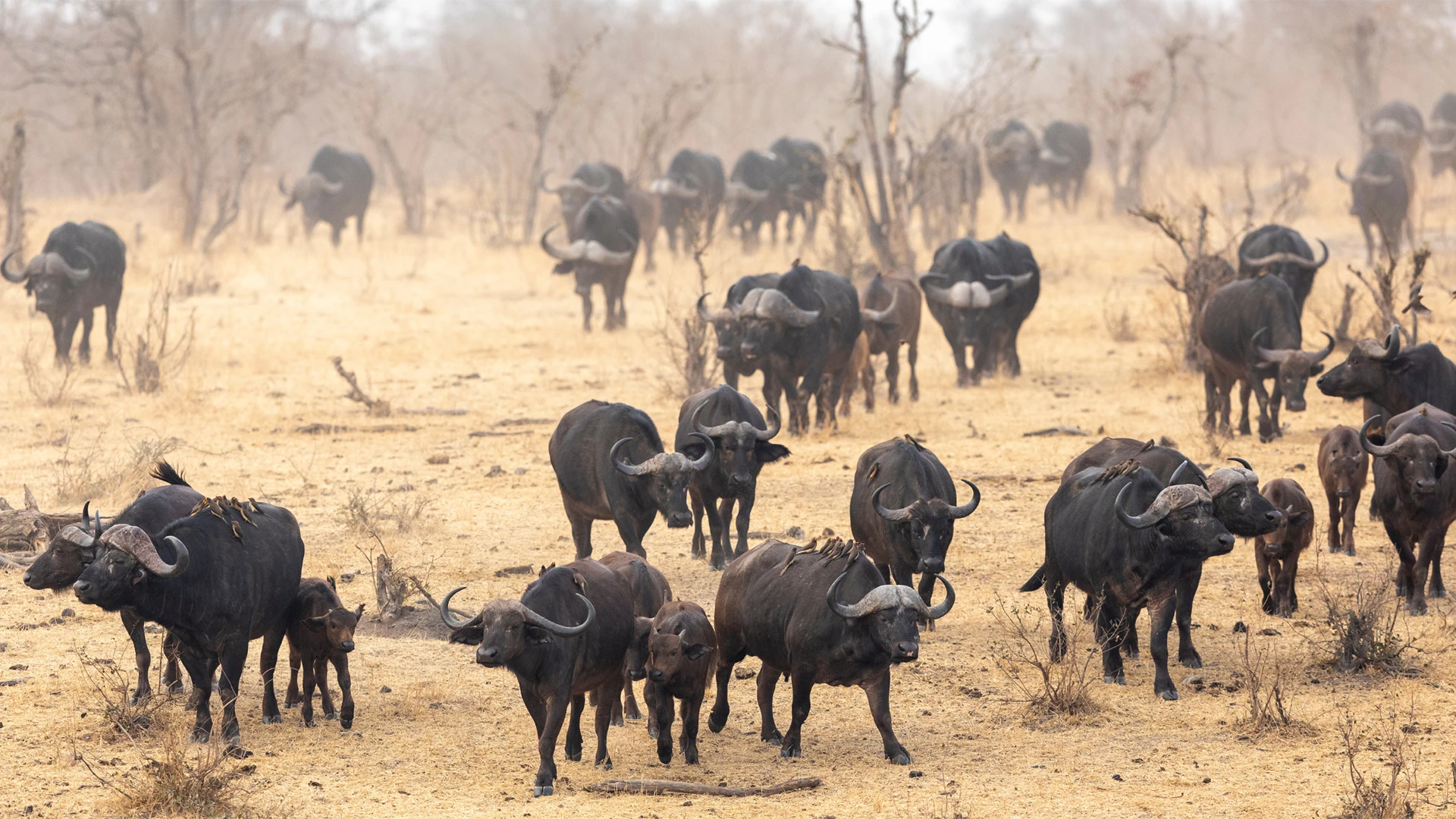
This is Greater Kruger's peak safari season, and for good reason. Rainfall drops to near zero from June through August, temperatures cool (winter nights can fall close to freezing), and the bush progressively dries out. Grasses recede, leaves thin, and wildlife concentrates along permanent rivers – the Sabie, Sand, Timbavati, and Klaserie – and at waterholes across the reserve. The peak season occurs during the dry winter months from June to September
Visibility reaches its annual high point in September and October. Animals gather in predictable locations, which is why these months consistently produce the most concentrated Big 5 sightings. For guests at private reserves such as Sabi Sand and MalaMala, off-road tracking and night drives extend the range of sighting opportunities.
Stefan Winterboer, Africa Geographic South Africa safari expert, rates this period highly: "I started my guiding career in Sabi Sand, a place I consider one of Africa's most consistently productive wildlife areas, with exceptional wildlife viewing year-round" – and that assessment holds especially true from June to September, when the Sabi River's banks become a focal point for elephant, hippo, leopard, and lion activity.
May
The rains wind down, and the bush begins to dry out. Temperatures are pleasant – warm days, cool evenings. Good wildlife viewing, particularly along rivers, and far fewer visitors than the winter peak months. An excellent month to go if you want the dry-season experience without the June–August crowds.
June
The dry season is properly established. Vegetation has thinned noticeably, and wildlife viewing improves week by week. Walking safaris come into their own as the long grass retreats and tracking conditions sharpen. Nights are cold; pack warm layers for early morning drives.
July and August
Animals concentrate around water sources in large numbers, creating multi-species sightings at key river crossings and waterholes. Lion prides are active and visible; leopards hunt openly in thinned cover; elephant herds move between diminishing water points. Private reserves record their highest predator encounter rates during these months. Lodges are busiest – book well in advance for sought-after camps in Sabi Sand and Timbavati.
September and October
The hottest months of the dry season. Temperatures climb sharply in October. Water scarcity intensifies wildlife congregation, and wildlife viewing can be outstanding – but the heat means early morning drives are essential. The first rains often arrive in late October, triggering a rapid green flush and a shift in animal behaviour. Some travellers consider late September to late October as the best-value period: excellent wildlife viewing, slightly lower rates than peak, and the thrill of the bush on the cusp of change.
Wet season – November to April
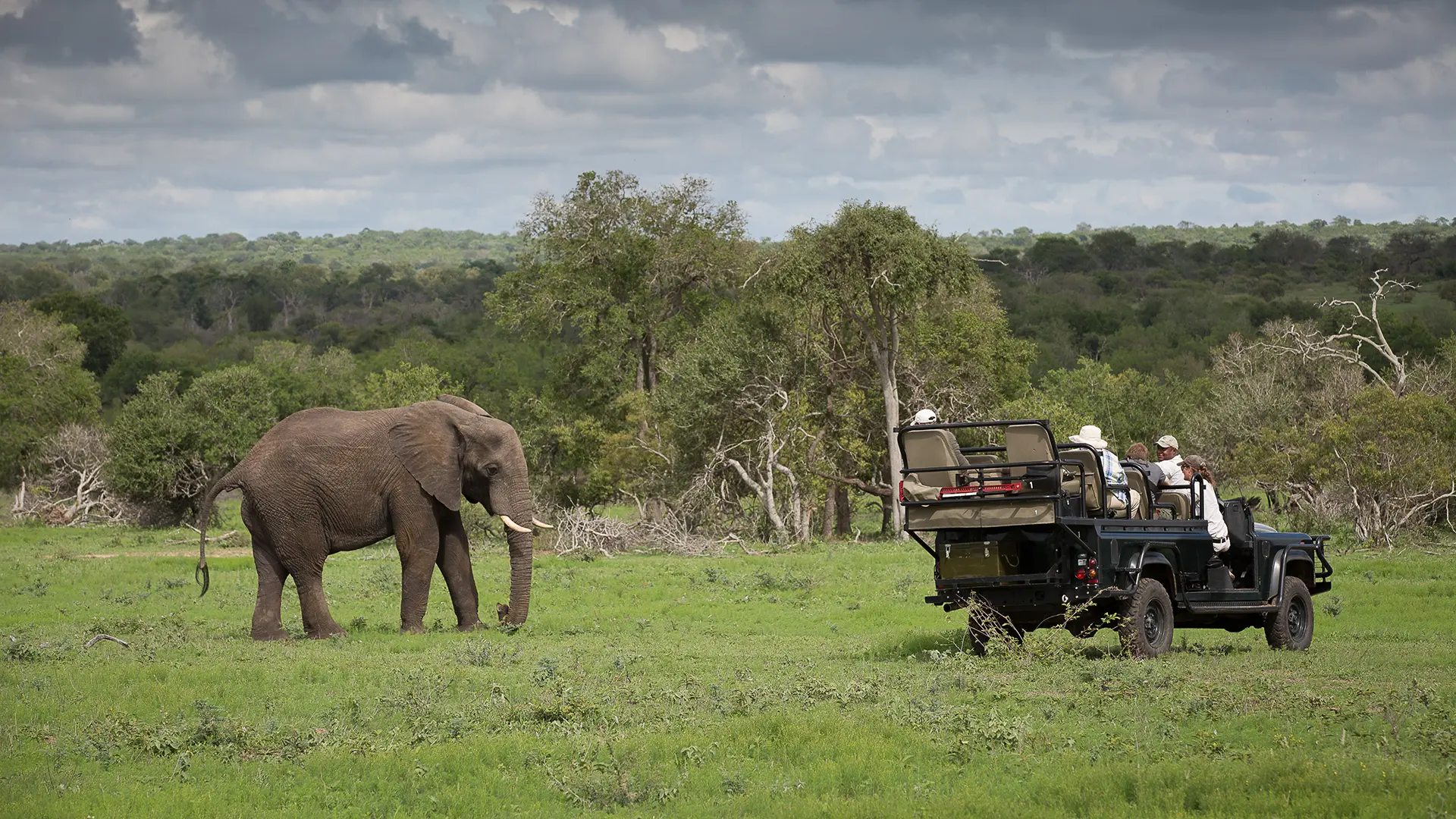
Greater Kruger's summer season runs from November through April. Rain falls in afternoon thunderstorms rather than all-day downpours, and mornings are typically clear and hot. The landscape transforms – brown gives way to deep green, waterholes fill, and prey animals scatter across the reserve rather than concentrating at permanent water.
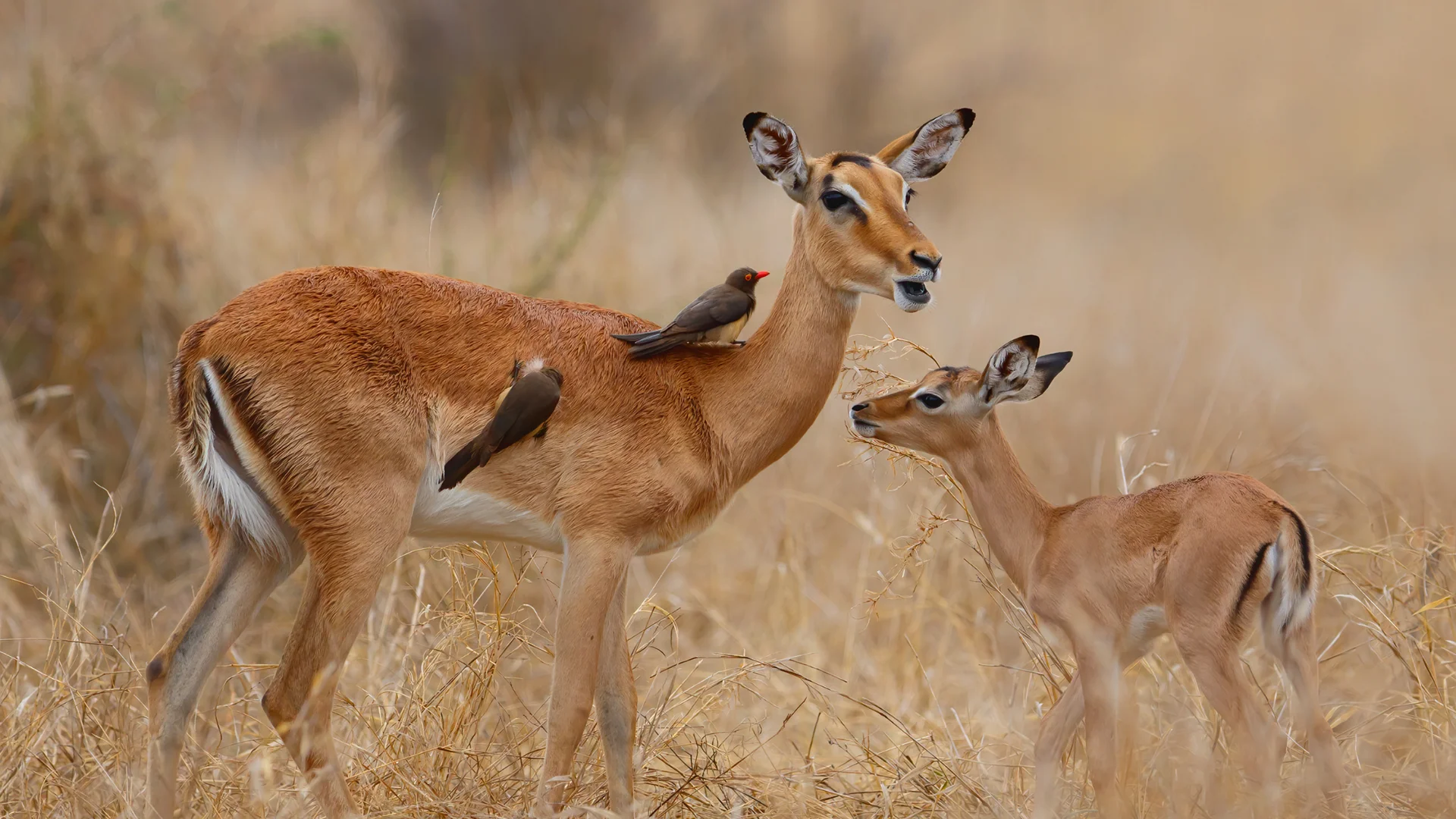
Wildlife viewing is harder work in the wet season. Dense vegetation reduces sightlines, and animals are less predictable in their movements. But the rewards are real and specific: this is when Greater Kruger's extraordinary birdlife peaks, when newborn impalas, zebra and wildebeest attract an uptick in predator activity, and when the bush is at its most photogenic.
November and December
The start of summer brings dramatic afternoon storms and rapid vegetation growth. Migratory birds – over 100 species arrive from Europe and Central Africa – make November a highlight for serious birders. Impala lambing season begins, creating high predator activity. Many private lodges offer green-season rates, making this an excellent value period for travellers who understand the trade-offs. December brings festive-season holiday makers and an uptick in visitor numbers. Lower lodge rates are available until mid-December, when festive-season rates kick in.
January and February
The wettest months. Vegetation is at maximum density and standing water is abundant. Wildlife viewing requires patience and skilled guiding, but the rewards include lush photography conditions, active predator families, and a bush that feels genuinely wild and alive. Malaria risk is at its highest during this period – ensure prophylaxis is in place before travel.
March and April
Rainfall begins to ease from March. The bush retains its green colour but vegetation starts to open up, improving sightlines progressively through April. This period offers some of Greater Kruger's best value – lower rates, fewer visitors, improving wildlife viewing – and appeals strongly to returning travellers who want a different perspective on the ecosystem. Wild dog denning season typically begins in late April or May, making Timbavati and the broader Kruger system a particularly rewarding destination for those targeting this species.
Wish you were here?
Wildlife highlights by month
Month | What to look for |
January–February | Migratory birds, impala lambs, crocodile nesting, green-season predator activity |
March–April | Improving visibility, wild dog denning (late April), continued birding |
May | Raptors, good predator sightings, comfortable temperatures, elephant herds consolidating |
June–July | Lion and leopard in prime viewing conditions, large elephant aggregations at rivers |
August | Peak predator concentration, cheetah and wild dog active in open terrain |
September | Exceptional Big 5 visibility, white rhino calves, hippo congregation at low rivers |
October | Hot and intense – highest predator-prey encounters; first green flush late month |
November–December | Migratory bird arrival, impala lambing, dramatic thunderstorms |
Practical notes for planning
Malaria: Greater Kruger is a malaria area. Consult a travel health clinic before your trip and take prophylaxis throughout. Risk is highest from November to April.
Temperatures: Winters (June–August) are dry and cool, with night temperatures sometimes dropping below 5°C. Summers (November–February) are hot and humid, with midday temperatures regularly above 35°C.
Booking lead times: For July and August in top Sabi Sand and MalaMala lodges, book twelve months in advance. Shoulder season (May, June, September) requires six months.
School holidays: South African school holidays fall in late June to July, December, and March–April. These periods see increased domestic visitor numbers in Kruger National Park.
Getting there: Kruger Mpumalanga International Airport (MQP, Nelspruit/Mbombela) and Hoedspruit Airport (HDS) serve the region. Charter flights link major reserves directly.
Frequently asked questions
The dry season from June to October offers the best conditions for Big 5 wildlife viewing. Reduced vegetation and the concentration of animals around permanent water sources – particularly the Sabie, Sand, and Timbavati rivers – dramatically increases sighting frequency. July and August are peak months for predator encounters. Private reserves such as Sabi Sand, MalaMala, and Timbavati offer off-road driving and night drives year-round, which improves wet-season sightings considerably compared to self-drive in the national park.
Yes – with the right expectations. The wet season (November to April) brings dense vegetation and more dispersed wildlife, which makes sightings harder but not unlikely. The rewards include over 100 migratory bird species, newborn animals, lush photographic conditions, and lower lodge rates at many private reserves. January and February are the most challenging months for wildlife viewing, but March and April offer improving conditions alongside excellent value. Skilled guides at private reserve lodges navigate wet-season bush effectively.
July and August are the peak tourist months in Greater Kruger, driven by the combination of optimal wildlife viewing and South African school holidays (late June to mid-July). Top lodges in Sabi Sand, MalaMala, and Timbavati fill quickly during this period and rates are at their highest. December is also busy due to South African school holidays and international festive travel. If you want peak wildlife viewing with fewer visitors, consider May, June, or late September.
Walking safaris are available in Greater Kruger's private reserves throughout the year, though conditions vary. The dry season (May to October) is generally preferred – long grass recedes, tracks are clearly visible, and the risk of surprising animals is reduced. Wet-season walking is possible and offers a different perspective, but some lodges limit walking to the cooler months. In Kruger National Park, SANParks offers guided wilderness trails from March to November. Confirm availability with your specific lodge or our safari experts when booking. Learn more about walking safaris.
Malaria transmission peaks during the hot, wet summer months from November through April, when mosquito populations are highest. Greater Kruger falls within a malaria-endemic zone year-round, so prophylaxis is recommended regardless of travel dates. Consult a travel health clinic at least four to six weeks before departure to discuss appropriate antimalarial medication. Precautions such as long-sleeved clothing at dawn and dusk, insect repellent, and sleeping under a net remain important across all seasons. Learn more about malaria-free safaris.
Leopard sightings in Greater Kruger's private reserves – particularly Sabi Sand and MalaMala – are consistently good year-round, as these areas have large, habituated leopard populations. The dry season (June to October) offers the clearest viewing conditions as vegetation thins. Night drives during this period frequently produce extended sightings. MalaMala is considered one of Africa's top leopard-viewing destinations, with sightings reported on the majority of drives throughout the year. Our safari expert Luis Gama describes it as offering "leopard sightings around every corner" with "effortless Big Five encounters."
April falls in the late wet season as rainfall eases and vegetation begins to open up. Wildlife viewing improves progressively through the month, and April can offer an excellent balance of lush scenery and reasonable sightlines. Wild dog denning season typically begins in April or May, making this a good period to target African wild dogs – particularly in Timbavati and Klaserie, which have resident packs. Birdlife remains outstanding, and predator activity is elevated as prey animals remain plentiful. Visitor numbers are lower than peak, and some lodges offer competitive rates.
For peak season (July–August) at top private reserve lodges in Sabi Sand, MalaMala, and Timbavati, booking twelve months ahead is strongly recommended. These lodges have limited capacity and fill quickly for their best rooms. Shoulder season travel in May, June, and September typically requires six months' notice. Green season travel (November–April) has more flexibility, though popular lodges still require advance planning. Africa Geographic's safari experts can advise on availability and alternatives across the full Greater Kruger portfolio.
Start planning your dream safari
Our travel experts will craft a no-obligation itinerary just for you. We have crafted over 5,000 safaris since 1991. Your personal details are protected; we only use this information to contact you.
Why book your safari with us?

Deep Experience & Knowledge
Handcrafted experiential safaris since 1991.
Travel in Africa is about knowing when and where to go, and with whom. A few weeks too early/late or a few kilometres off course, and you could miss the greatest show on Earth. And wouldn’t that be a pity?

Trust & Safety

Make A Difference
We donate a portion of the revenue from every safari sold to carefully selected conservation projects that make a significant difference at ground level.
YOUR safari choice does make a difference - thank you!