

Safari experts & storytellers. Since 1991


Meru: Kenya's last true wilderness frontier
Meru National Park at a glance:
Location: Central Kenya, ~300 km from Nairobi | Access: Light aircraft to park airstrips; ~5–6 hours by road from Nairobi |
Size: 870km² (87,000 hectares) | Best time to visit: July–October; January–February |
Nearest airport: Nairobi's Jomo Kenyatta (NBO) | Minimum recommended stay: 3–4 nights |
Currency: Kenyan Shilling (KES) | Malaria risk: Yes – prophylaxis strongly recommended |
Why visit Meru National Park?
There is a particular quality to Meru National Park that is difficult to name. It is the absence of tour vehicles, the radio chatter, the familiar choreography of a crowded sighting. In their place: rivers running in parallel through groves of doum palms, open grasslands stretching to the foot of the Nyambeni Mountains, and an awareness that you are moving through a wilderness still finding its rhythm after decades of recovery.
The park is inseparable from one of Africa's most enduring conservation stories: George and Joy Adamson raised an orphaned lion cub named Elsa here, released her into the wild, and documented the experience in the Born Free series of books; and the film that followed. Elsa's gravesite remains on the park's southern boundary. That same spirit of restoration defines Meru today. After a catastrophic period of poaching in the 1980s, a concerted effort by the Kenya Wildlife Service, the French Development Agency, and the International Fund for Animal Welfare rebuilt the park from near ruin. Elephants, lions, leopards, cheetahs and more have returned. The rhino sanctuary, where both black and white rhinos are protected within a fenced 84 km² enclosure, is one of only a handful of places in Kenya where rhinos can be reliably sought. The region has been designated a Lion Conservation Unit by the IUCN.
What sets Meru apart is not only what it has, but also what it lacks: the crowds.
5 Reasons We Love Meru National Park
The Born Free legacy: George and Joy Adamson's release of Elsa the lioness into Meru made literary and cinematic history. Her gravesite on the southern boundary is a quiet, affecting landmark.
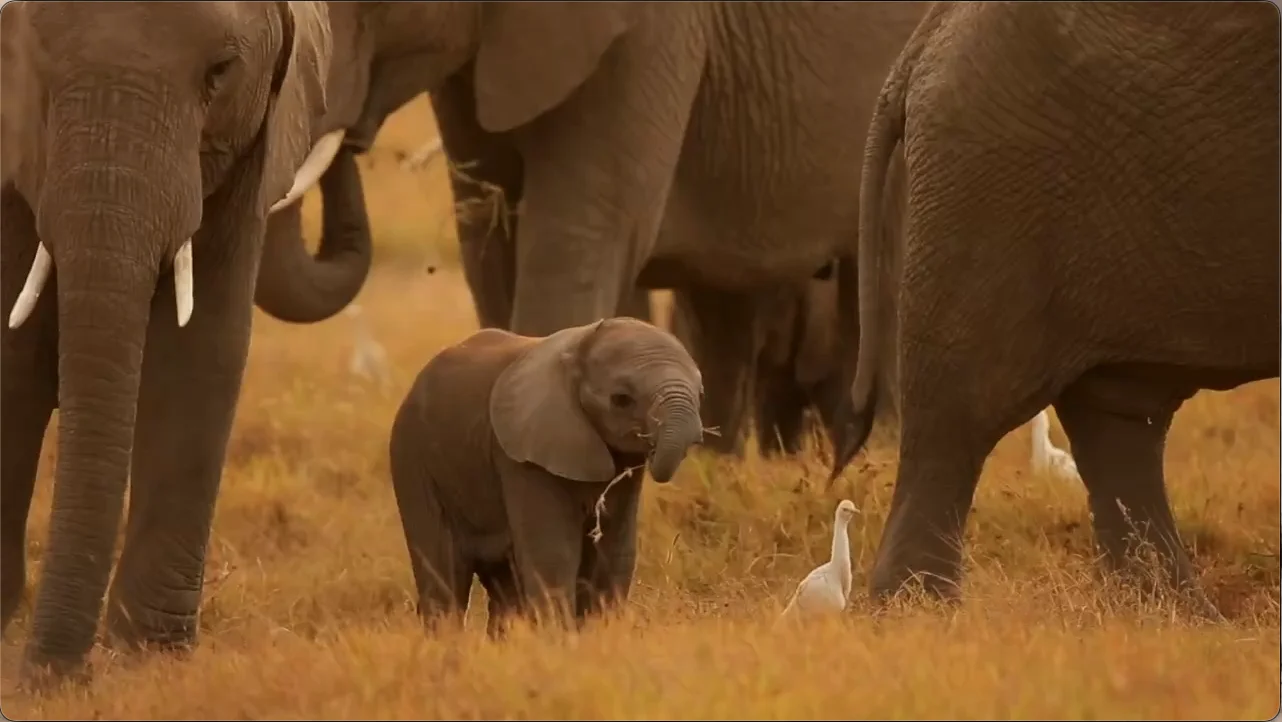
A Big Five wilderness without the crowds: Lions, leopards, cheetahs, elephants, and buffalos roam Meru's grasslands and riverine forests, and encounters are rarely shared with another vehicle.
The rhino sanctuary: Black and white rhinos are protected within an 84 km² fenced enclosure near the main gate; one of Kenya's best-managed sanctuaries, requiring patience and skill to explore.
Northern Kenya specialists: Reticulated giraffe, Grevy's zebra, Beisa oryx, and the long-necked gerenuk are among the arid-zone species that distinguish Meru from the more southern Kenyan parks.
Over 400 bird species: Pel’s fishing owls lurk beneath the canopies of the dense river trees. Other birds of particular interest include Hinde’s babbler, African finfoot, red-necked falcon, three-banded courser, Somali bee-eater, golden palm weaver, Boran cisticola and black-billed wood-hoopoe.
All you need to know about Meru National Park
About Meru National Park
Meru National Park, established in 1966, is in Kenya's Eastern Province, east of the town of Meru, with Mount Kenya visible on the western horizon. The park's landscapes are defined by dramatic gradients in rainfall: the wetter western reaches support tall grassland and lush swamps, while the east becomes progressively drier and semi-arid. Rivers fed by the Nyambeni Mountains flow through the park in parallel channels, creating a series of forested corridors and islands of dense vegetation within the open plains.
The Tana River marks the park's southern boundary; Kenya's longest river, it flows from the Aberdare Range and through springs on the Nyambeni Mountains, feeding the many permanent rivers that give Meru its islands-within-a-wilderness character.
The Meru Conservation Area, of which this national park is the centrepiece, extends to encompass Bisanadi and Rahole National Reserves and Kora National Park, a 5,000 km² wilderness to the south-east where George Adamson continued his lion conservation work until his death in 1989. Together, these protected areas form one of Kenya's most extensive conservation landscapes.
Things to do in Meru National Park
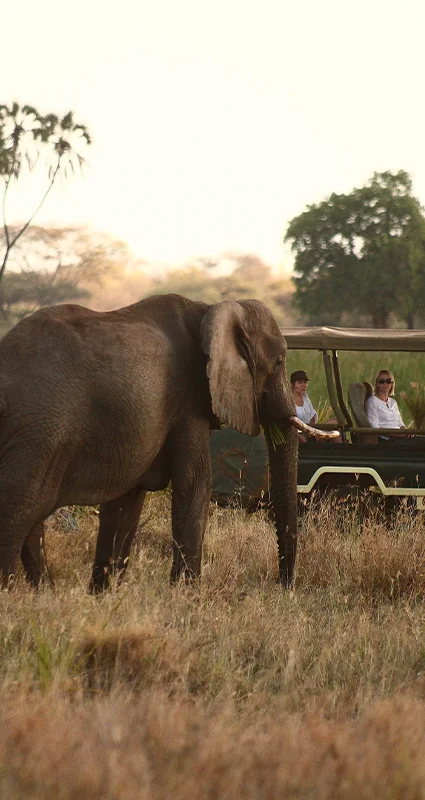
Game drives: Meru's network of roads winds through open grassland, dense riverine forest, and seasonal swamps — ideal for extended drives in near-solitude, without the convoy effect of busier parks.
Rhino sanctuary: Black and white rhinos occupy an 84 km² fenced enclosure near the main gate. Sightings require effort and reward patience, making them all the more rewarding when they come.
Night drives: Several lodges offer night drives, revealing leopards, hyenas, bush babies, and the many nocturnal inhabitants rarely glimpsed during daylight hours.
Guided bush walks: Walking through Meru's doum palm groves and along its riverbanks offers a ground-level encounter with the bush, guided by rangers skilled in tracking the park's diverse wildlife.
River cruises: The Tana River and Adamson's Falls offer opportunities for boat cruises, with resident hippo pods and large crocodiles commonly encountered.
Birdwatching: The wide range of habitats is home to over 400 bird species, including Pel’s fishing owl, black-billed wood-hoopoe, Hinde’s babbler, African finfoot, red-necked falcon, three-banded courser, Somali bee-eater and Boran cisticola.
What wildlife will I see in Meru National Park?
The Big Five: Elephant, lion, leopard, buffalo, and both black and white rhino are all present in Meru. The rhinos are protected within a dedicated sanctuary near the main gate.
Cheetah: Meru's open grasslands provide excellent cheetah habitat. Sightings occur, though the tall grass can make these fast-moving predators difficult to spot without a skilled guide.
Northern Kenya specialists: Reticulated giraffe, Grevy's zebra, Beisa oryx, and odd-looking gerenuk are found in Meru's drier eastern zones.
Large herbivore herds: Buffalo, impala, and zebra congregate in large herds around Meru's swamps and rivers.
Primates and smaller predators: Vervet monkeys, olive baboons, and mongoose species are common across the park, as is a diverse array of smaller carnivores.
Water-related species include Bohor reedbuck, Nile crocodile and hippopotamus.
Where to stay in Meru National Park
Elsa's Kopje occupies one of Meru's most dramatic positions: a cluster of stone and canvas cottages built into and around the granite rock formation known as Mughwango Hill, within the park. The lodge was designed with the landscape in mind: each cottage is oriented to frame a different aspect of the bush, the river, or the sky, creating an extraordinary intimacy with the surrounding wilderness. The name is a deliberate tribute to the Adamsons and the Born Free legacy: Joy Adamson's former camp once stood near this kopje. Elsa's Kopje offers full-service luxury, an outdoor pool perched above the treeline, attentive guiding, and meals served on an elevated terrace as the bush comes alive in the late afternoon.
Rhino River Camp is a small, intimate tented camp set beside one of Meru's permanent rivers, with canvas walls that channel every sound of the bush directly to the ear. The camp is boutique and riverside, with a swimming pool and open-sided common areas that dissolve the boundary between interior and exterior. The focus here is on wildlife exploration: game drives across the park, visits to the rhino sanctuary, and the kind of evening conversations around a fire that only happen when a camp is small, and its guiding is genuinely expert.
Trusted by thousands of ecstatic travellers
✔️ 5-Star Trustpilot Rating ✔️ Condé Nast Travel Specialist Award Winner
✔️ Accredited by SATSA ✔️ 5,000+ Exceptional Safaris Since 1991
Why choose Africa Geographic to plan your safari?

"The advice we got while planning our trip was spot-on and delivered in all aspects. We really felt understood in what African experience we were looking for. This type of expert advice from people who know what they are talking about is what we appreciated: people that understand our values and flexibly propose travel options based on their own beliefs and experience."

"My team at Africa Geographic was amazing. They took the time to listen to what I wanted to experience on my trip and designed the perfect itinerary for me. They were always available when I had a question and made sure I was well prepared from the time I booked all the way through my trip...making my dream vacation an amazing and unforgettable experience."

"Africa Geographic was amazing to work with. They tailored a trip specifically for us based on our wants and needs. They take the time to listen to you and understand what you are looking for from this sometimes once in a lifetime experience. They are professional, courteous, friendly and with you every step of the way... If I could give them more than 5 stars I would!"
Wish you were here?
Frequently asked questions
July to October is the dry season and widely considered the best time for wildlife viewing in Meru, when animals gather around the remaining water sources and vegetation thins, improving visibility. January and February offer a shorter dry window and are also rewarding. The green seasons, March to June and November, bring lush scenery, excellent birdwatching, and far fewer visitors.
Yes. Following the restoration programme led by the Kenya Wildlife Service in the early 2000s, Meru has been rebuilt with a dedicated ranger force and functioning infrastructure. The park is well-managed and considered a safe destination for international visitors.
The most practical access is via light aircraft from Nairobi's Wilson Airport to one of the park's airstrips. The drive from Nairobi takes approximately five to six hours. The park is around 300km from the capital and approximately one hour from the town of Meru.
Most international visitors require a visa to enter Kenya. The East Africa Tourist Visa, valid for Kenya, Uganda, and Rwanda, is also available. Confirm current requirements with your nearest Kenyan embassy or consulate before travel.
Yes. Meru National Park is in a malaria-risk area. Anti-malarial prophylaxis is strongly recommended. Consult your healthcare provider well in advance of your departure date to discuss the most appropriate medication.
Yellow fever vaccination is required if you are arriving from a yellow fever endemic country. Hepatitis A, typhoid, and tetanus vaccinations are commonly recommended. Consult a travel health clinic for up-to-date advice.
Yes. Elephant, lion, leopard, buffalo, and both black and white rhino are all present in Meru. The rhinos are protected within a dedicated 84 km² fenced sanctuary near the main gate. Elephant numbers have recovered substantially since the height of the poaching crisis.
Meru receives far fewer visitors than the Maasai Mara or Amboseli, making it one of Kenya's most unspoilt and uncrowded parks. It is also the setting of the Born Free story and one of only a small number of parks in Kenya offering rhino sanctuary visits alongside a full range of Big Five species.
Yes. Meru's drier eastern zones support species characteristic of northern Kenya, including reticulated giraffe, Grevy's zebra, Beisa oryx, and the distinctive gerenuk, an antelope that browses by standing on its hind legs.
Meru is where conservationists George and Joy Adamson raised Elsa the lioness from a cub and ultimately released her into the wild. Joy's book Born Free documented the experience and was later adapted into a major film. Elsa's gravesite is marked on the park's southern boundary, and Joy's former camp site is near Elsa's Kopje lodge.
Meru is part of the larger Meru Conservation Area, which includes Bisanadi and Rahole National Reserves and Kora National Park, a 5,000 km² wilderness associated with George Adamson's continued lion work. Together they form one of Kenya's most extensive conservation landscapes.
A minimum of three nights is recommended to do the park justice. Four nights allows time to explore different zones of the park, visit the rhino sanctuary, enjoy a river cruise or bush walk, and settle into the slower rhythm that Meru rewards.
Meru can be a rewarding destination for families with older children who are interested in wildlife and conservation. Some lodges have minimum age policies for certain activities. Speak with your Africa Geographic safari consultant about family-specific requirements and which camps are best suited to your group.
Our safaris typically cost from US$700 per person, per night, depending on the accommodation comfort level, time of year and activities. This price usually includes accommodation, all meals, game drives, experienced guides, airport transfers, and 24/7 support from our team.
You only make your first payment when you book your holiday. Your second (last) payment is about 105 days before you travel.
Peak season bookings require 12–18 months of advance planning. Trips outside of peak season can be arranged 6–9 months ahead, with better rates and availability.
Click here to schedule a no-obligation call with one of our Safari Experts or fill in our 2-minute form with your questions. Our team of experts are here to help! Whether you’re curious about the best time to travel, want to hear first-hand about an experience or need help planning your safari.
Explore more African destinations
Start planning your dream safari
Our travel experts will craft a no-obligation itinerary just for you. We have crafted over 5,000 safaris since 1991. Your personal details are protected; we only use this information to contact you.
Why book your safari with us?

Deep Experience & Knowledge
Handcrafted experiential safaris since 1991.
Travel in Africa is about knowing when and where to go, and with whom. A few weeks too early/late or a few kilometres off course, and you could miss the greatest show on Earth. And wouldn’t that be a pity?

Trust & Safety

Make A Difference
We donate a portion of the revenue from every safari sold to carefully selected conservation projects that make a significant difference at ground level.
YOUR safari choice does make a difference - thank you!