

Safari experts & storytellers. Since 1991



Savute: wild heart of Chobe National Park
Savute at a glance:
Location: Western section of Chobe National Park, bordering Moremi Game Reserve | Also known as: Savuti, both spellings are used |
Part of: Chobe National Park (11,700 km², est. 1968) | Best time to visit: June–October (dry season; predators concentrate at waterholes) |
Activities: Game drives, guided walks in the lodge vicinity, historic rock site visits, and zebra migrations | Key difference from Chobe Riverfront: No permanent river; remote interior; predator-focused; no boat safaris |
Access: Light aircraft from Maun and Kasane | Accommodation: Luxury lodges |
Why visit Savute?
When David Livingstone, the first European to visit the area, saw the Savute Channel in 1851, it was flowing. Thirty years later, it had disappeared, and the Savute Marsh had dried out, remaining this way for almost 80 years. It flowed again from the late 1950s to the early 1980s, then receded again. In 2009, after another extended hiatus, the channel began flowing again and by January 2010 had spilt into the Savute Marsh for the first time in three decades, but for how long? No one knows …
Savute, also spelt Savuti, is the western section of Chobe National Park, the 11,700 km² reserve in northeastern Botswana. One of four distinct regions alongside the Riverfront, Linyanti, and Ngwezumba Pans, Savute offers something fundamentally different: a remote, arid interior with open savanna and raw predator-prey interactions.
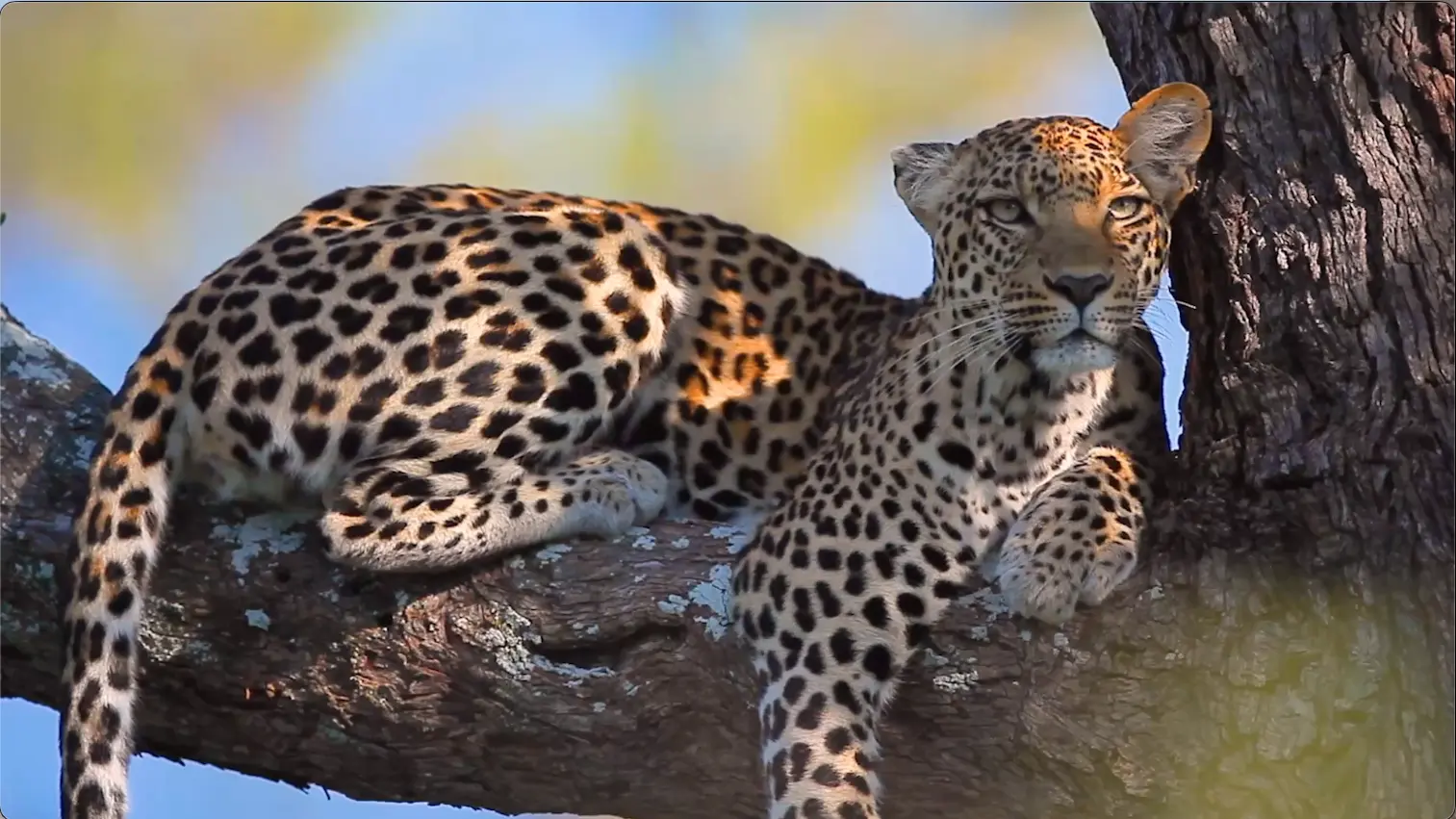
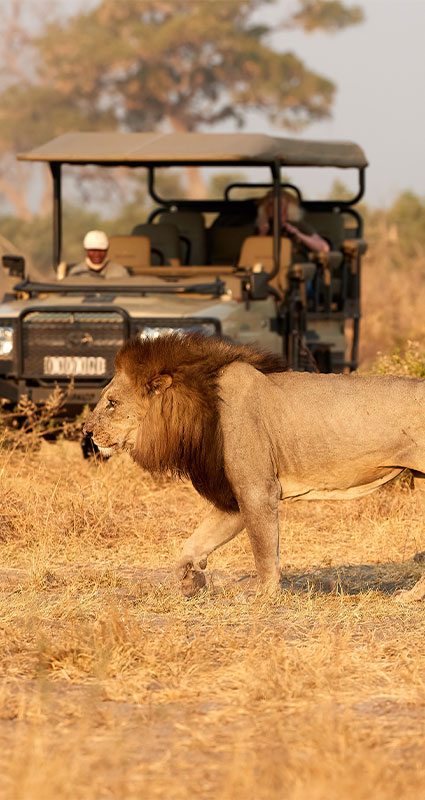
Savute is best known for its large populations of resident predators, particularly lions, cheetahs, and hyenas. Iconic encounters include lions that specialise in hunting elephants during the dry season and leopards that catch catfish in drying pools. Huge, old elephant bulls wander the vast plains, large herds of buffalo kick up dust, and lions and hyenas, eternal enemies, battle for dominance.
With no permanent river, wildlife depends on the Savute Marsh, the Savute Channel, and seasonal waterholes. In the dry months, this concentration creates a predator-prey dynamic unlike anything else in Chobe National Park.
Our CEO, Simon Espley, says of his Savute safaris:
"Not many places can match the dry season Savuti experience as hundreds of buffalo and elephants converge on the last remaining water sources, kicking dust in the air, bellowing and trumpeting at each other. All the while, scarred lions watch and wait for the moment to attack. Riveting stuff, not to be missed."
5 Reasons We Love Savute
Predator capital of Botswana: Savute is home to large resident populations of lions, cheetahs, leopards, and hyenas, making it one of Africa's most intense and reliable predator-viewing destinations.
The enigmatic Savute Channel: The channel has dried and reflowed multiple times over the past century, leaving a haunting landscape of bleached, dead trees and shifting marsh terrain.
Remote and less visited: Savute is wilder and far less visited than the Chobe Riverfront, offering genuine remoteness and encounters without the vehicle concentrations of the north.
Dry-season waterhole drama: Seasonal waterholes draw elephant and buffalo herds, creating intense predator-prey interactions that are the defining Savute dry-season experience.
A different side of Chobe: Savute borders Moremi to the southwest and is the perfect contrast to a Chobe Riverfront stay: more remote and raw.
Our favourite Savute safari ideas
All you need to know about Savute
About Savute
Savute (also spelt Savuti) occupies the western stretch of Chobe National Park, bordering Moremi Game Reserve to the southwest.
The Savute Channel flows from the Linyanti River for approximately 100 km, emptying into the Savute Marsh and, farther south, into the Mababe Depression, once part of the ancient Makgadikgadi super-lake. Also fed by the Ngwezumba River, the Mababe, when filled, attracts thousands of migratory birds and large herds of zebra.
The Savute Channel is a river that has repeatedly dried up and flowed again, not because of rainfall patterns but due to subtle tectonic movements along ancient fault lines beneath the Kalahari Basin. These shifts alter the land gradient by just a few metres, enough to redirect water across vast distances. The landscape is characterised by fossil lakebeds, sandy plains, and isolated rocky outcrops known as kopjes, which are among the few exposures of ancient Precambrian bedrock in an otherwise flat region. This combination of tectonic activity, vanished lakes, and shifting waterways has created one of Africa’s most dynamic and ecologically rich environments.
Things to do in Savute
Game drives through open savanna and along the dry Savute Channel and Savute Marsh, the primary way to find Savute's dense resident lion, leopard, cheetah, and hyena populations.
Guided walk in the vicinity of your lodge, reading tracks and signs left by the area's dense predators, and to add to your bird list.
Photography at the Savute Channel: the haunting landscape of bleached, dead trees lining the ancient watercourse creates an unforgettable visual backdrop.
Historic rock sites: Guests can also visit the ancient San rock paintings at the Gubatsa Hills, a small, hilly outcrop that stands out as a prominent landmark in the otherwise flat landscape.
Zebra migrations: One of Botswana's two great zebra migrations passes through Savute during December to February every year.
What wildlife will I see in Savute?
Savute is well-known for intense predator action and unusual activity such as elephant-hunting lions, leopards catching catfish in drying marsh pools, and spotted hyenas clashing with lions for dominance. The plains and woodlands also host massive herds of Cape buffalo, wandering elephant bulls, and highly active populations of leopards, cheetahs and African wild dogs.
Other species to look out for include brown hyenas, aardwolf, genet, civet, porcupine, African wildcat and bushbabies as you head back to camp in the early evening after your afternoon game drive.
Visitors during the summer rainfall months can look forward to large herds of migrating zebra moving between the Chobe Riverfront to the north and Nxai Pans further south, triggered by rain in the salt pan region.
Northern Botswana plays host to about 450 bird species, including secretary bird, kori bustard, carmine bee-eaters, southern ground-hornbill, scaly-feathered weaver and crimson-breasted shrike.
Where to stay in Savute
Because Savute is a remote destination in the vast Chobe National Park, we send our guests to only one lodge in the area. The lodge is situated deep within the national park, so your morning drives begin immediately, and you don't waste the golden morning light commuting into the park.
Perched directly on the banks of the channel, Savute Safari Lodge is a flagship luxury lodge with year-round wildlife viewing. The lodge hosts just 24 guests at a time in 11 private, thatched chalets. Built from local timber and glass, each suite features private viewing decks, expansive en-suite bathrooms, and a design that blends into the surrounding camelthorn trees.
The lodge features indoor and outdoor lounging spaces and multi-level decks that offer exceptional game viewing over a nearby waterhole. A high-level deck features a telescope for stargazing and wildlife spotting, while a photographic hide brings you eye‑level with wildlife at the waterhole. The fire deck, bar, dining area and pool overlooking the waterhole round off the guest areas.
Trusted by thousands of ecstatic travellers
✔️ 5-Star Trustpilot Rating ✔️ Condé Nast Travel Specialist Award Winner
✔️ Accredited by SATSA ✔️ 5,000+ Exceptional Safaris Since 1991
Why choose Africa Geographic to plan your safari?

"A mobile safari is a great way to feel part of the environment and leave nothing but footprints. With no fences the animals are free to wander into camp which added extra excitement, specially when lions roared throughout the night VERY close to camp in Savute. This is the 3rd trip that I have done with Africa Geographic and I highly recommend them. Every trip has been good value for money and impeccably organised. I will be back!"

"AG arranged the perfect trip to Botswana for my family. The consultant really listened to our brief and arranged an awesome itinerary within our budget. All transports were on time - we did not have a single hiccup or moment of stress. Organising the trip was also easy with good communication and support. I have travelled a lot and this would be one of my greatest travel experiences. Thanks Africa Geographic for organising it!"

"Africa Geographic was amazing to work with. They tailored a trip specifically for us based on our wants and needs. They take the time to listen to you and understand what you are looking for from this sometimes once in a lifetime experience. They are professional, courteous, friendly and with you every step of the way. Their job does not end until you are home. If I could give them more than 5 stars I would!"
Wish you were here?
Frequently asked questions
Savute and Savuti refer to the same destination; both spellings are used interchangeably. Savute is the western section of Chobe National Park in northeastern Botswana, bordering Moremi Game Reserve to the southwest. It is one of four distinct regions within Chobe NP and is fundamentally different from the Chobe Riverfront: no permanent river, no boat safaris, and a wildlife experience defined by predators and open savanna rather than riverine elephant herds.
The Chobe Riverfront is the park's northeastern edge, on the banks of the Chobe River, and is famous for boat safaris, elephant herds, and its proximity to Kasane. Savute occupies the western interior; remote, arid, with no permanent river. Where the Riverfront is the most visited and accessible part of Chobe National Park, Savute is the wildest and most remote. Wildlife depends on seasonal water sources rather than on a permanent river, which creates a different, more intense predator-prey dynamic in the dry season.
The dry season from June to October is the primary wildlife-viewing window in Savute. As water sources become scarce, elephant, buffalo, and zebra concentrate at the remaining waterholes, drawing predators in numbers that make this period genuinely exceptional. The intensity peaks from August through October, when waterholes are at their lowest and competition for resources is highest. The wet season (roughly November to April) brings lush scenery and newborn wildlife, as well as the annual zebra migration.
Unlike the Chobe Riverfront, where the draw is primarily elephant, Savute's wildlife experience is defined by predator encounters, particularly lions, cheetahs, and hyenas. The combination of open savanna, seasonal waterholes, and resident prey species creates conditions that support unusually dense predator populations year-round.
The Savute Channel is a watercourse that flows from the Linyanti River for approximately 100 kilometres, carrying water to the Savute Marsh and farther south to the Mababe Depression. It is one of the most geographically enigmatic features in southern Africa: over the past 100 years, it has dried up and recommenced flowing several times, not because of rainfall patterns but due to subtle tectonic movements along ancient fault lines beneath the Kalahari Basin.
Savute (Savuti) hosts large resident populations of lions, cheetahs, spotted hyenas, and brown hyenas; more reliably encountered here than in most other parts of Botswana. Leopards and African wild dogs are also resident. Elephant and buffalo herds congregate at dry-season waterholes. Large herds of zebra enter the Mababe Depression when seasonal rains fill it.
The Savute Marsh is the body of water and wetland into which the Savute Channel empties after flowing approximately 100 kilometres from the Linyanti River. The marsh and the broader depression that surrounds it provide the primary seasonal water source for Savute's wildlife. The extent and character of the marsh changes dramatically depending on whether the Savute Channel is flowing, one of several reasons Savute's landscape and wildlife dynamics shift unpredictably from year to year.
The Mababe Depression is a large, flat area to the south of the Savute Marsh, also fed by the Ngwezumba River from the northeast. It was once part of the ancient Makgadikgadi super-lake. When filled with water during good rains, it attracts thousands of migratory birds and large herds of zebra. The Mababe's scale and flatness, described as immense and fringed by thickets of trees, make it a distinctive and photogenic landscape within the broader Savute area.
Savute is accessible from Maun and Kasane by light aircraft to a bush airstrip. Africa Geographic handles all transfer logistics for any booked itinerary.
Yes, and combining both areas is one of the most rewarding ways to experience the full range of what Chobe National Park offers. The Riverfront delivers boat safaris and elephant herds at scale; Savute delivers predator concentration and wild remoteness. Together, they represent two fundamentally different safari characters within the same park. Most combined itineraries access Kasane for the Riverfront and Maun for Savute, with the two typically connected by light aircraft. Africa Geographic regularly designs these combinations as part of broader northern Botswana circuits.
Our safaris typically cost from US$700 per person, per night, depending on the accommodation comfort level, time of year and activities. This price usually includes accommodation, all meals, game drives, experienced guides, airport transfers, and 24/7 support from our team.
You only make your first payment when you book your holiday. Your second (last) payment is about 105 days before you travel.
Peak season bookings require 12–18 months of advance planning. Trips outside of peak season can be arranged 6–9 months ahead, with better rates and availability.
By booking through Africa Geographic, a portion of every safari sold supports carefully selected conservation projects at ground level, alongside our conservation publishing work. Our chosen lodges adhere to strict environmental practices, including limited vehicle numbers and sustainable camp operations.
Click here to schedule a no-obligation call with one of our Safari Experts or fill in our 2-minute form with your questions. Our team of experts are here to help! Whether you’re curious about the best time to travel, want to hear first-hand about an experience or need help planning your safari.
Explore more African destinations
Start planning your dream safari
Our travel experts will craft a no-obligation itinerary just for you. We have crafted over 5,000 safaris since 1991. Your personal details are protected; we only use this information to contact you.
Why book your safari with us?

Deep Experience & Knowledge
Handcrafted experiential safaris since 1991.
Travel in Africa is about knowing when and where to go, and with whom. A few weeks too early/late or a few kilometres off course, and you could miss the greatest show on Earth. And wouldn’t that be a pity?

Trust & Safety

Make A Difference
We donate a portion of the revenue from every safari sold to carefully selected conservation projects that make a significant difference at ground level.
YOUR safari choice does make a difference - thank you!