

Safari experts & storytellers. Since 1991

Trust us to find you the rarest animals, the most spectacular wildlife events, the remotest landscapes and deeply meaningful cultural encounters!
What's the difference between Chobe Riverfront, Savute and Linyanti?
A pride of lions lies motionless in the shade of a dead marula tree, watching a herd of buffalo raise dust on the horizon. On the Chobe River, an elephant swims between islands while a boat drifts past at eye level. These are two entirely different safaris, and both belong to Chobe.
Chobe National Park in northeastern Botswana (11,700 km², established 1968) splits into three distinct safari regions: Chobe Riverfront, Savute and Linyanti.
The Riverfront, near Kasane, delivers the highest wildlife density and boat safaris on the Chobe River.
Savute, reached only by light aircraft, is Botswana's predator stronghold with no permanent river.
Linyanti, the most exclusive of the three, pairs painted wolf (wild dog) sightings with mokoro-accessible marshland and minimal vehicle traffic.
How the three regions differ at a glance
Each region sits inside the same national park, but access, wildlife focus and lodge style vary sharply. Here is the shorthand version before the detail below.
Chobe Riverfront: permanent river, boat safaris, closest to Kasane
Savute: no permanent river, predator-dense interior, fly-in only
Linyanti: private reserves, painted wolves, mokoro-friendly marshes
All three link by light aircraft for a combined Chobe circuit
Riverfront suits first safaris; Savute and Linyanti suit repeat guests
Chobe's three regions compared side by side
Attribute | Chobe Riverfront | Savute | Linyanti |
Location | Northeastern edge, near Kasane | Remote western interior | Remote northwest, private reserves |
Access | Road from Kasane, or light aircraft | Light aircraft only | Light aircraft only |
Wildlife focus | Elephant herds, hippo, crocodile, birding | Lion, cheetah, hyena, elephant-hunting prides | Painted wolves, elephant, buffalo, sable, roan |
Signature activity | Boat safari on the Chobe River | Game drives around the Savute Channel | Game drives, mokoro, night drives |
Who it suits | First-time Chobe visitors, families, birders | Repeat safari-goers wanting predator drama | Guests wanting exclusivity and quiet wilderness |
3 things we love about Chobe's three sides
Beyond the headline wildlife, here’s what makes treating Chobe as three regions, rather than one, worth the extra planning.
A single park, three characters: swap boat safaris for predator drama and mokoro outings without changing countries or flights.
Genuine crowd control: Savute and Linyanti share only a handful of lodges between them, a clear contrast to the Riverfront in peak months.
Built-in trip logic: light aircraft link all three, so a Riverfront start and a Linyanti finish is a realistic nine- or ten-night itinerary.
Chobe's regions at a glance
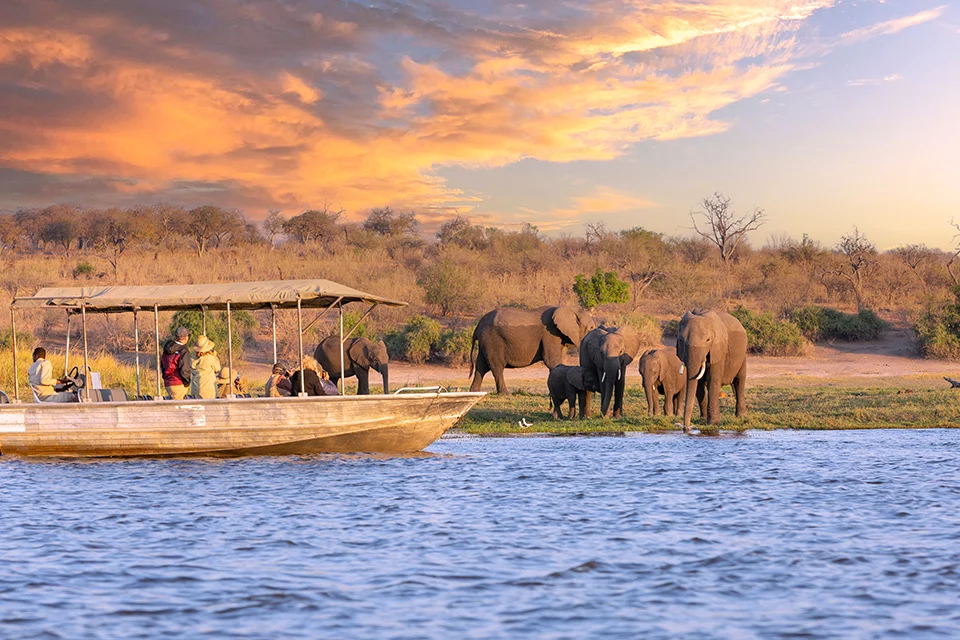
Chobe Riverfront near Kasane
The park's most visited region, running along the Chobe River near Kasane. Permanent water draws Botswana's densest elephant concentrations, and boat safaris give water-level access to hippo, crocodile and prolific birdlife. Reachable by road, it is Chobe's easiest region to combine with Victoria Falls.
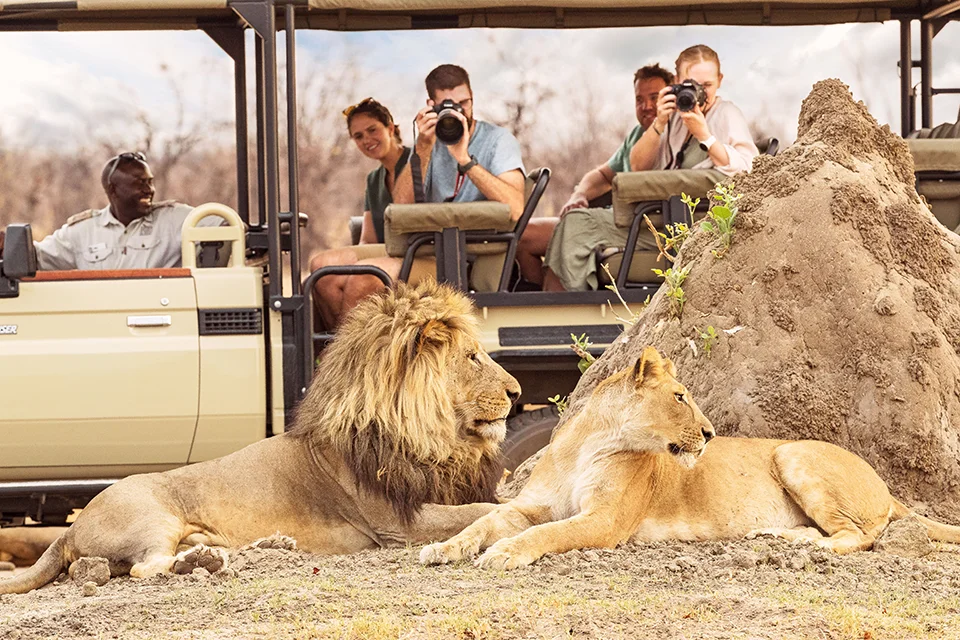
Savute, Botswana's predator country
The park's remote western interior, with no permanent river. Wildlife depends on the Savute Channel and seasonal waterholes, concentrating lion, cheetah and hyena in some of Botswana's most reliable predator sightings. Reached only by light aircraft, Savute trades accessibility for genuine wilderness.
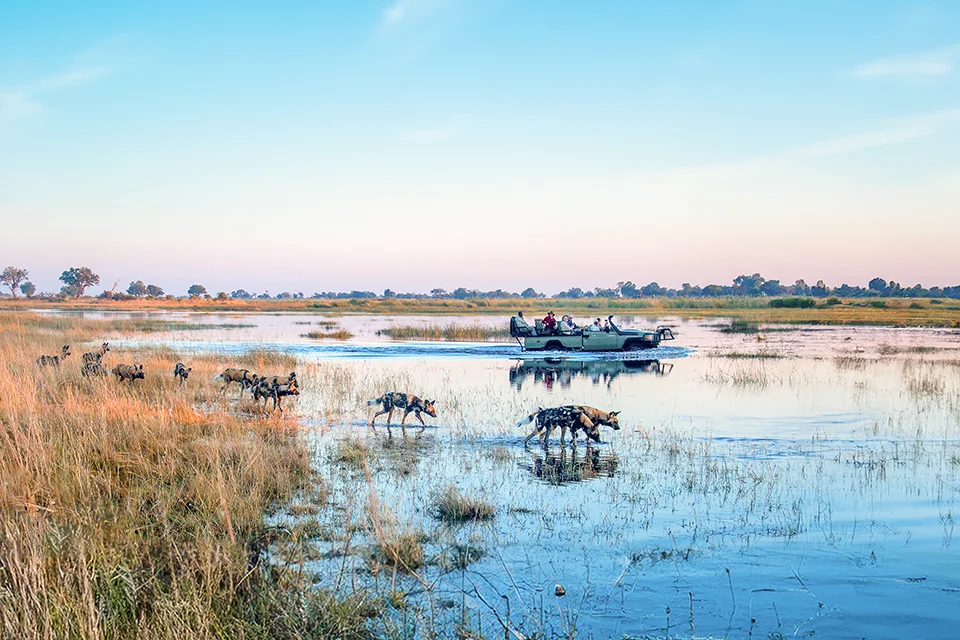
Linyanti's private reserves
The remote northwest corner, bordering Namibia, where private reserves replace national park rules. Painted wolves, permanent river water and mokoro-accessible marshland define the experience, alongside near-total exclusivity: only a handful of lodges share this vast wilderness.
Chobe safaris we love
Chobe Riverfront in detail
Getting to the Chobe Riverfront
The Riverfront sits on Chobe National Park's northeastern edge, a short drive from Kasane's airport and town centre. Most guests fly into Kasane from Johannesburg or Maun, then transfer by road directly to their lodge. Its position also makes it Chobe's most road-accessible region, and the only one that pairs naturally with an overland transfer from Victoria Falls, a short distance across the Zimbabwe or Zambia border.
Wildlife on the Chobe Riverfront
The Chobe River holds the world's highest elephant density, and afternoon drives during the dry season regularly reveal hundreds gathered at the water's edge. Hippo and Nile crocodile are abundant, and boat safaris bring guests level with both. The Riverfront is also home to Botswana's only puku population, alongside lion, leopard and hyena, and over 460 recorded bird species across the wider park.
Who the Riverfront suits
First-time visitors wanting the classic Chobe elephant spectacle
Families combining safari with an easy road transfer from Victoria Falls
Birders chasing waterbirds such as Pel's fishing owl and African skimmer
Photographers who want boat-based, eye-level wildlife images
Travellers with limited time who cannot add a light aircraft leg
Guests comfortable sharing sightings with more vehicles in peak season
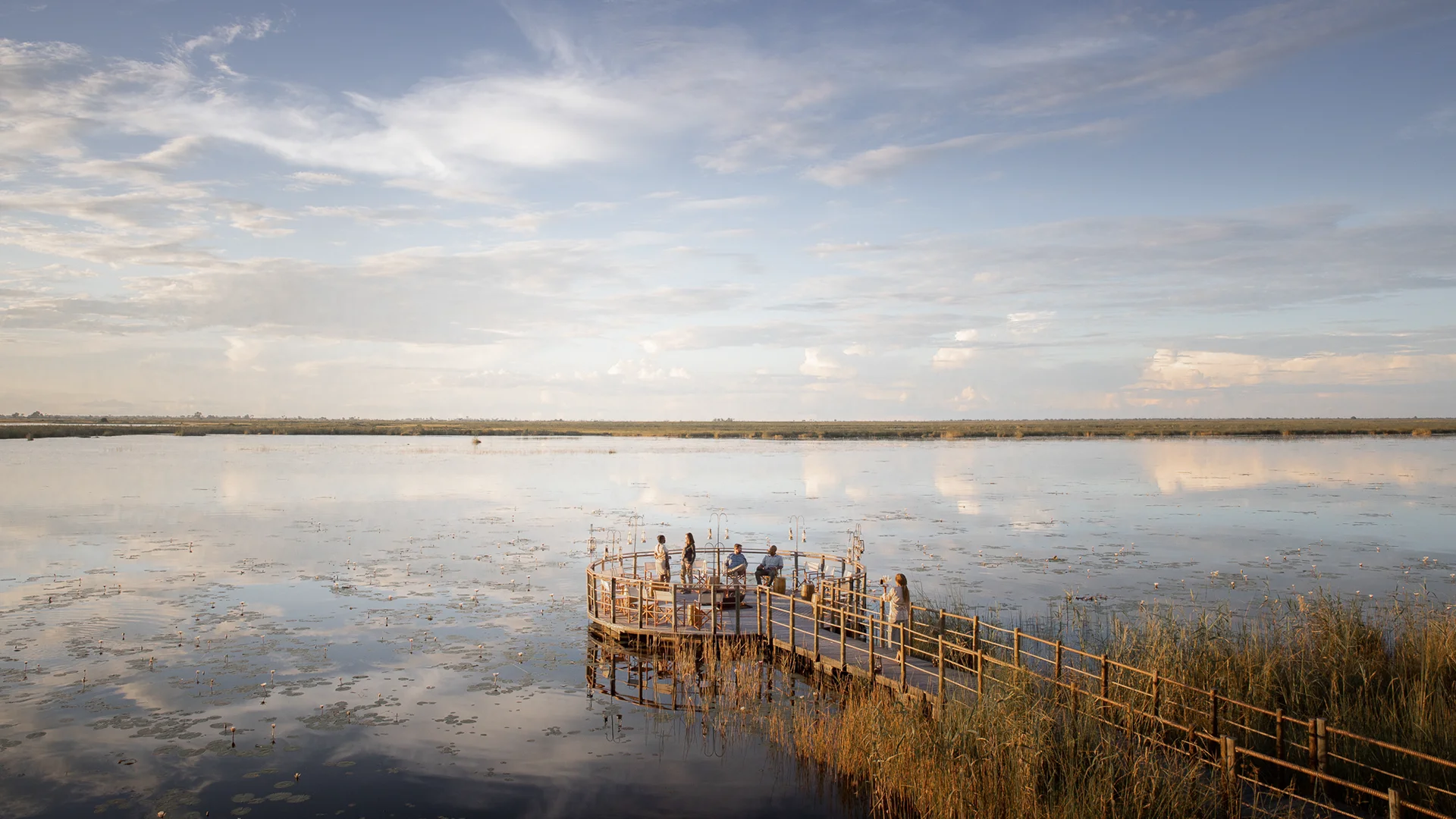
Savute in detail
Getting to Savute
Savute lies deep in Chobe's remote western interior, far from any road network guests would use. Access is by light aircraft only, typically via a scheduled charter from Maun or Kasane to a bush airstrip near the lodge. This removes any road-transfer option but places guests inside the park from the moment they land, with morning drives starting immediately rather than after a long commute.
Wildlife on the Savute plains
Savute has no permanent river, and this scarcity is precisely what drives its predator-viewing reputation. Lions here are known for hunting elephants during the dry season, while leopards have been recorded catching catfish in drying marsh pools. Cheetah, spotted and brown hyena, and African wild dog are all resident. Our CEO, Simon Espley, describes the dry-season waterhole drama at Savute as "riveting stuff, not to be missed."
Who Savute suits
Repeat safari-goers chasing predator action over elephant scale
Photographers wanting lion, hyena and elephant interactions
Guests comfortable flying by light aircraft to a remote airstrip
Travellers prioritising exclusivity over resort-style facilities
Those visiting in the dry season, June to October, for peak drama
Guests pairing Savute with the Riverfront for two contrasting styles
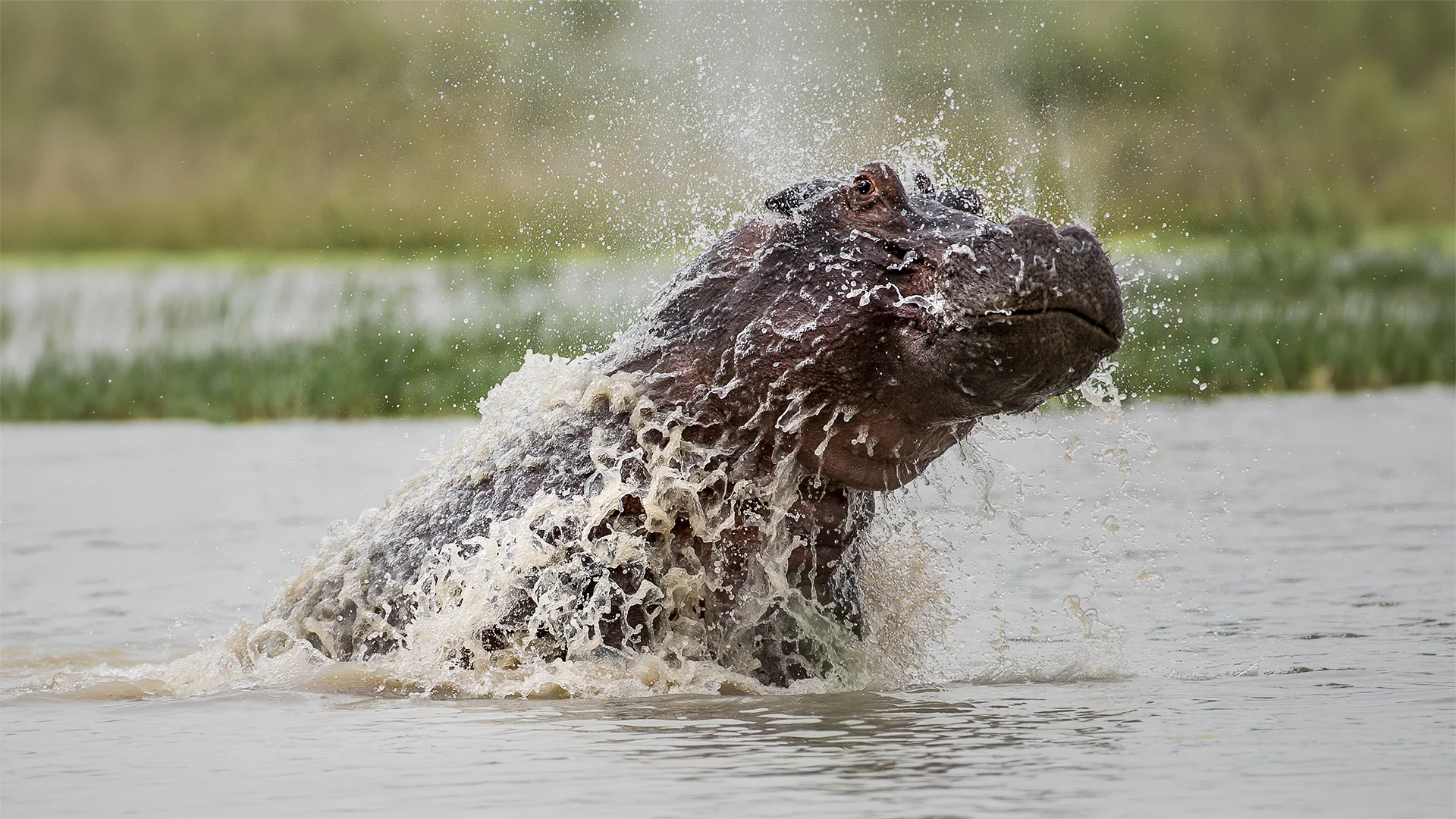
Wish you were here?
Linyanti in detail
Getting to the Linyanti reserves
Linyanti sits in Chobe's remote northwest corner, bordering Namibia, and functions as a private reserve rather than national park land. Access is by light aircraft only, usually via Kasane or Maun to a private airstrip. Once on the ground, guests move between game drives, mokoro outings and night drives without the restrictions that apply inside the adjoining national park.
Wildlife in the Linyanti marshes
The Linyanti River and Savute Channel shape a landscape of lagoons, reedbeds and riparian forest more reminiscent of the Okavango Delta than the rest of Chobe. Painted wolves (African wild dogs) are a particular draw, alongside elephant, buffalo, lion, leopard, cheetah, and the seldom-seen sitatunga and red lechwe in the reed beds. Sable and roan antelope also occur in the surrounding woodland.
Who Linyanti suits
Guests who have done a Botswana safari before and want something quieter
Travellers prioritising painted wolf sightings above other predators
Those wanting mokoro outings alongside game drives and night drives
Honeymooners and couples seeking privacy at low-density lodges
Photographers drawn to reflection and reed-bed compositions
Guests happy to trade lodge choice and facilities for exclusivity
Frequently asked questions
All three sit inside Chobe National Park, but they function as separate safari experiences. The Chobe Riverfront, near Kasane, has a permanent river, boat safaris and Botswana's highest elephant density. Savute is a remote, arid interior with no permanent river, known for predator action and reached only by light aircraft. Linyanti is a private-reserve area in the far northwest, prized for painted wolves, mokoro outings and near-total exclusivity.
Yes. Combining regions is common and often the most rewarding way to experience Chobe. A typical circuit starts at the Riverfront for boat safaris and elephant herds, continues to Savute by light aircraft for predator viewing, and finishes in Linyanti for painted wolves and mokoro outings. Most combined itineraries run nine to twelve nights, using Kasane and Maun as connecting hubs. Our safari experts sequence flights and transfers for you.
The Chobe Riverfront usually suits first-time visitors best. It offers road access from Kasane, the park's highest wildlife density, boat safaris on the Chobe River, and an easy pairing with Victoria Falls. Its accessibility does mean more vehicles at busy sightings during peak season, but the wildlife concentration and variety of activities make it the most complete single-region introduction to Chobe National Park.
Savute and Linyanti generally suit travellers who have already experienced a classic Botswana safari. Savute delivers concentrated predator action, including lions that hunt elephants, in a remote, fly-in-only setting. Linyanti offers even greater exclusivity, private-reserve activities such as night drives and mokoro, and reliable painted wolf sightings, all with minimal vehicle traffic at sightings.
The Chobe Riverfront is reachable by road from Kasane, or by light aircraft from Maun. Savute is accessible only by light aircraft, typically via a scheduled charter from Maun or Kasane to a bush airstrip. Linyanti is also light aircraft only, usually connecting through Kasane or Maun to a private airstrip. Africa Geographic arranges all flight and transfer logistics for booked itineraries.
Yes. Savute and Savuti are two spellings of the same region, used interchangeably across Botswana tourism. It refers to the remote western section of Chobe National Park, bordering Moremi Game Reserve, known for its dry Savute Channel and dense resident predator populations rather than a permanent river.
Boat safaris are unique to the Chobe Riverfront, where the permanent Chobe River allows cruising among elephants, hippos and crocodiles. Mokoro (traditional dugout canoe) outings are offered in Linyanti, where quieter channels and marshland suit paddling. Savute has no permanent river and offers neither boat safaris nor mokoro; its activities centre on game drives and guided walks.
June to October, the dry season, is the strongest window across all three regions, as scarce water concentrates wildlife. The Riverfront peaks with elephant herds at the water's edge; Savute's predator action intensifies from August to October as waterholes shrink; and Linyanti's painted wolf sightings remain reliable throughout. November's first rains bring dispersal and the start of the zebra migration.
Chobe Riverfront lodges include Chobe Game Lodge, Ngoma Safari Lodge, Muchenje Safari Lodge and several properties in Kasane. Savute has one flagship property, Savute Safari Lodge, positioned directly on the Savute Channel. Linyanti's small collection includes Linyanti Bush Camp and Linyanti Ebony, alongside Lagoon Camp and Lebala Camp in the neighbouring Kwando Reserve.
Safaris in all three regions typically start from US$700 per person per night, depending on lodge, season and activities, and usually include accommodation, meals, game drives, guiding and transfers. Fly-in regions such as Savute and Linyanti add light aircraft costs. Peak season (June to October) bookings should be arranged 12–18 months ahead; other periods can be booked 6–9 months out.
Start planning your dream safari
Our travel experts will craft a no-obligation itinerary just for you. We have crafted over 5,000 safaris since 1991. Your personal details are protected; we only use this information to contact you.
Why book your safari with us?

Deep Experience & Knowledge
Handcrafted experiential safaris since 1991.
Travel in Africa is about knowing when and where to go, and with whom. A few weeks too early/late or a few kilometres off course, and you could miss the greatest show on Earth. And wouldn’t that be a pity?

Trust & Safety

Make A Difference
We donate a portion of the revenue from every safari sold to carefully selected conservation projects that make a significant difference at ground level.
YOUR safari choice does make a difference - thank you!