

Safari experts & storytellers. Since 1991

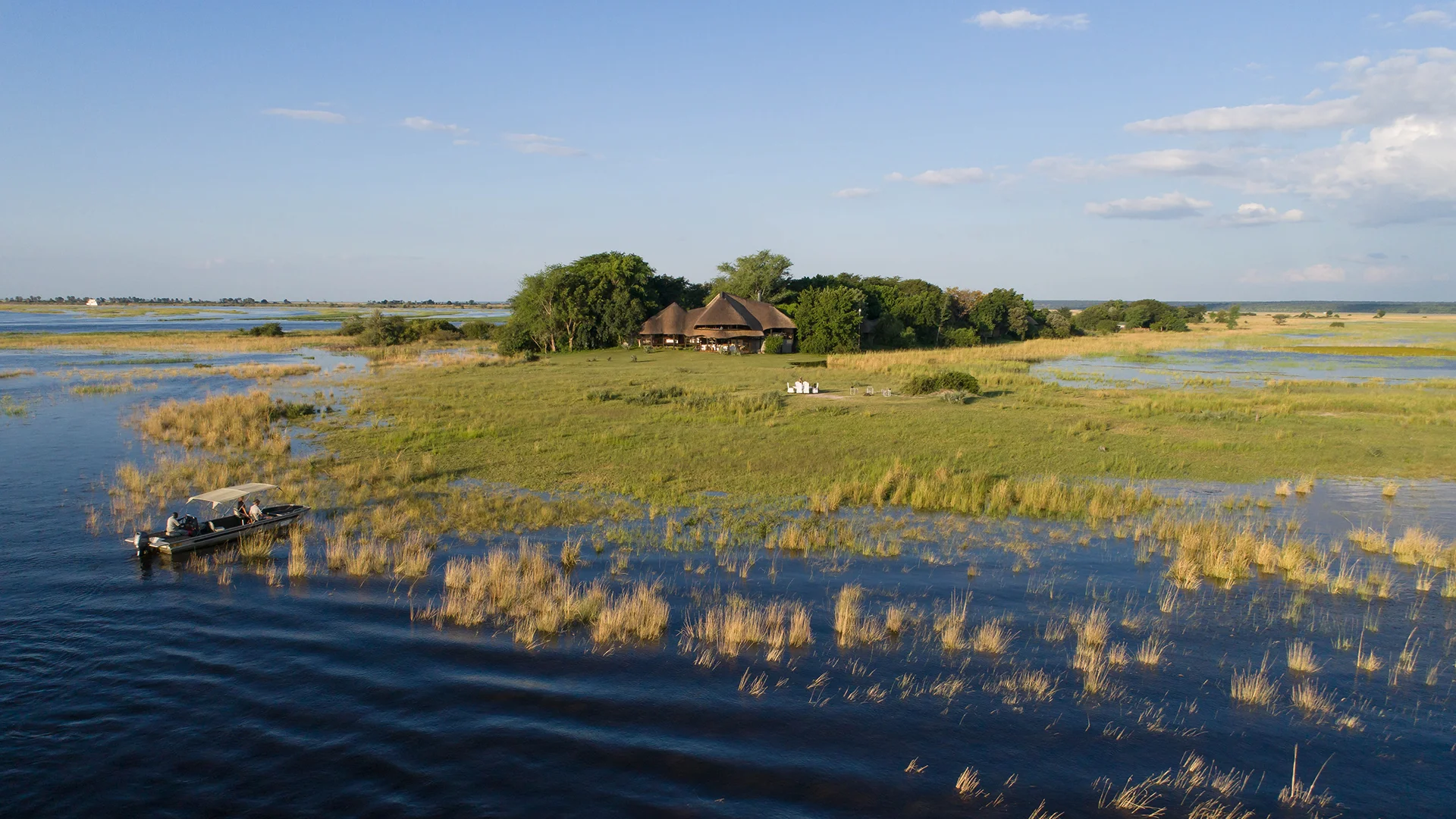
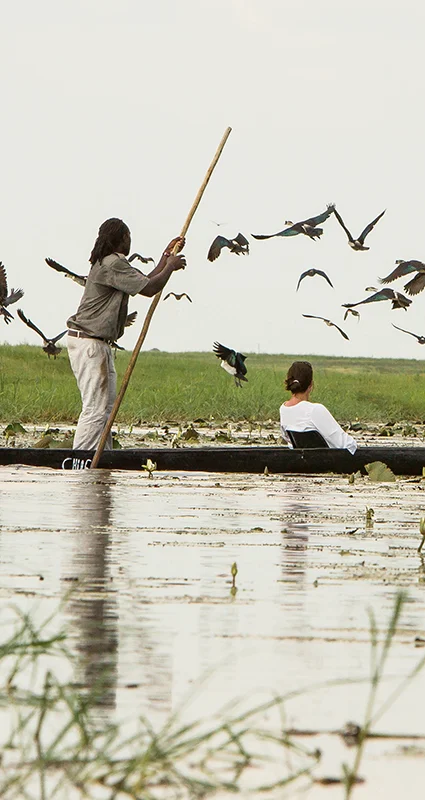

Trust us to find you the rarest animals, the most spectacular wildlife events, the remotest landscapes and deeply meaningful cultural encounters!
Is a boat safari or game drive better in Chobe National Park?
A Chobe safari should include both a boat safari and a game drive, since each covers wildlife and terrain the other cannot reach. Boat safaris on the Chobe River give water-level access to elephants swimming between islands, hippo pods and waterbirds, while game drives cover Savute's predator action, inland woodland species and terrain away from the river. For a standard two- to three-night Riverfront stay, plan on one game drive and one boat safari most days, adjusting the balance for photography, birding, family or honeymoon priorities.
Which comes first, boat or vehicle
First-time visitors should aim to experience both within a two-night stay
Photographers often prioritise the early morning boat trip for still water light
Families with young children may prefer game drives for space to move around
Birders should treat the boat safari as the non-negotiable daily activity
Honeymooners typically choose the sunset cruise as the standout activity
Neither activity replaces the other. The Chobe River and its floodplains reward different approaches depending on the time of day, the season, and what you most want to see or photograph.
Boat safari vs game drive at a glance
Feature | Boat safari | Game drive |
Best for | Water-level photography, birdlife, elephants crossing | Predator sightings, woodland species, wider terrain |
Key wildlife | Elephants swimming, hippo pods, crocodiles, waterbirds | Lions, leopards, buffalo herds, antelope |
Regions available | Chobe Riverfront only | Riverfront, Savute, Linyanti |
Typical duration | 2–3 hours | 3–4 hours |
Movement style | Calm drifting, limited manoeuvring | Active tracking, off-road where permitted |
3 things we love about a Chobe boat safari
Beyond the elephant photographs every visitor expects, here is what sets a Chobe River boat safari apart from a standard land-based game drive.
A water-level vantage: drifting at eye level with hippos, crocodiles and swimming elephants offers sightlines that no vehicle on the bank can ever match.
Botswana's only puku antelope: this fawn-coloured antelope, common in Zambia, is found in Botswana only along this specific stretch of the Chobe River.
Exceptional birdlife access: over 460 species recorded in Chobe, with African skimmers, fish eagles and Pel's fishing owl regularly seen from the water.
Where each activity is available in Chobe
Chobe Riverfront
The only part of Chobe National Park with a permanent river, the Riverfront is where every boat safari happens. Game drives run here too, along Serondela Road and the floodplain tracks, but the river is what sets this section apart from the rest of the park.
Savute
Savute has no permanent river, so there is no boat safari option here at all. Game drives are the only way to explore the Savute Channel and Marsh, where dry-season predator sightings are among the most reliable and dramatic anywhere in Botswana.
Linyanti
Linyanti's marshes and lagoons support motorboat trips and mokoro outings alongside game drives, giving guests a genuine hybrid of both experiences in one remote, watery setting well away from the Riverfront's crowds.
Chobe safaris we love
What a boat safari shows you
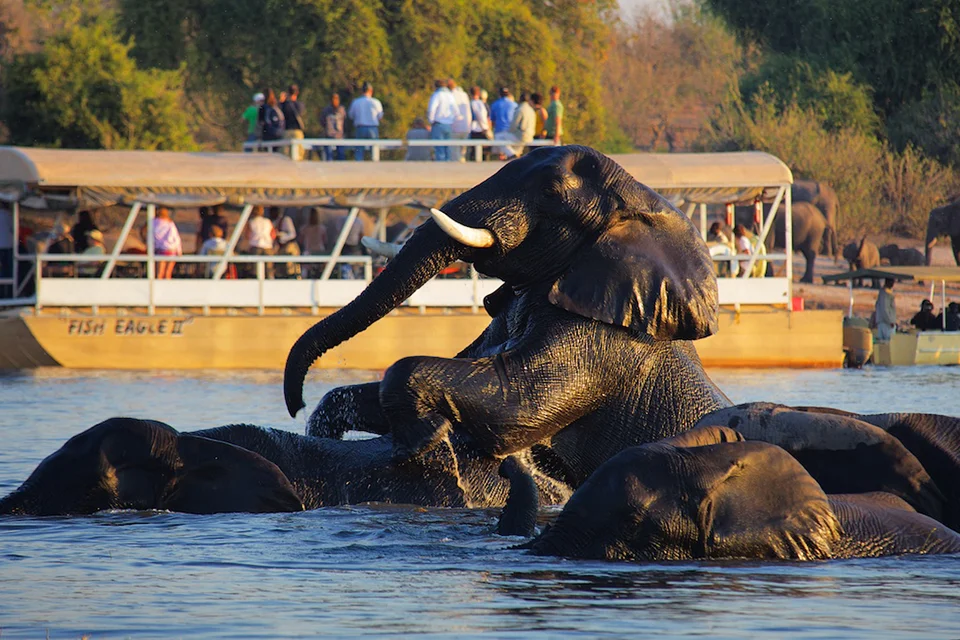
Elephants at the water's edge
From a boat, elephants swimming between islands, submerging fully before surfacing trunks-first, are a routine dry-season sight along the Chobe River. Herds cross the channels in tight family groups, calves swimming alongside adults, at a proximity and eye-level angle that a vehicle parked on the bank simply cannot replicate. Afternoon light reflecting off open water adds a dimension to elephant photography that no game drive can offer, and the slow drift of the boat gives you time to properly compose each shot.
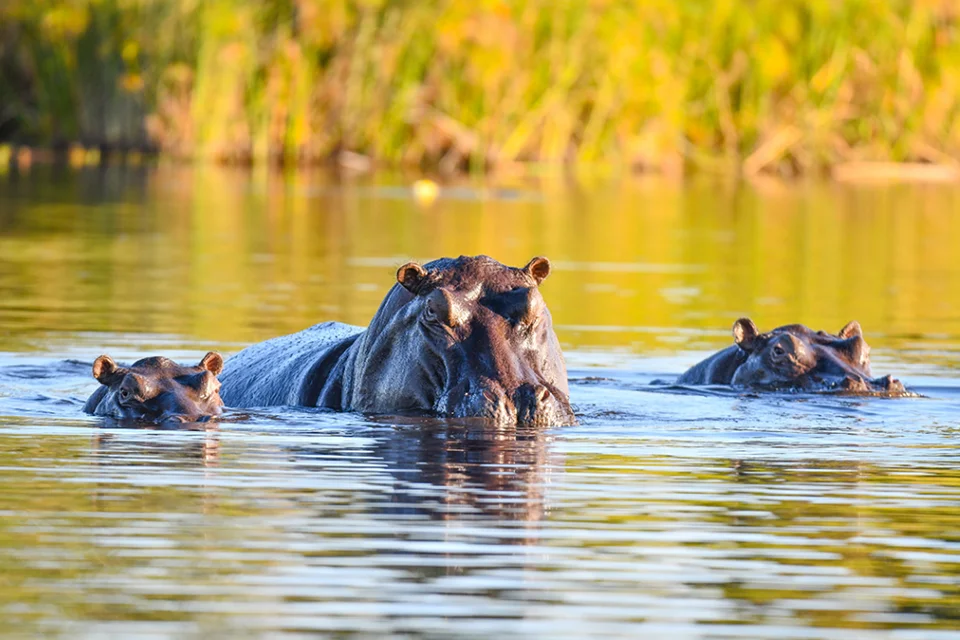
Hippos, crocodiles and birdlife up close
Chobe's safari boats move slowly along the river's channels, bringing guests within metres of basking crocodiles, resting hippo pods, and some of the more than 460 bird species recorded across the wider park. Species such as the African skimmer, fish eagle and the elusive Pel's fishing owl are considerably easier to locate and photograph from water level than from a vehicle on the riverbank, where dense vegetation often blocks the clearest lines of sight.
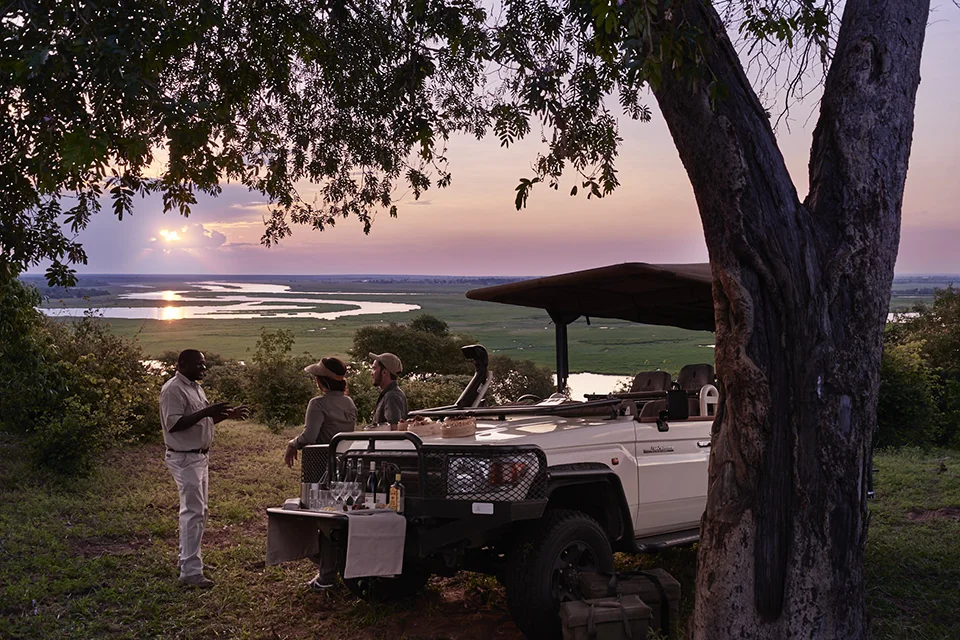
What a boat safari can’t cover
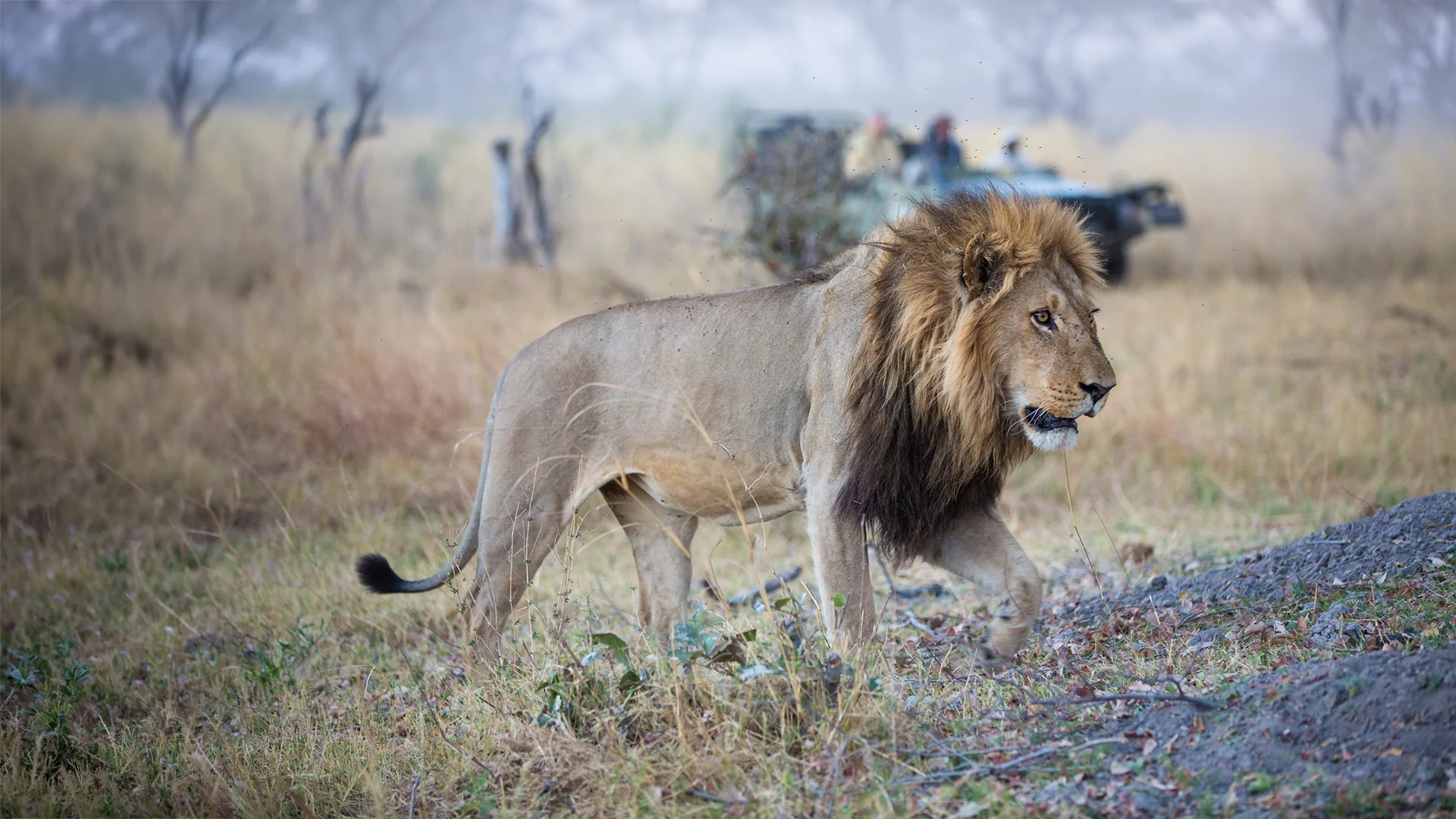
Predator sightings away from the river, including Savute's lion and hyena activity
Wide open plains and woodland habitats well beyond the immediate floodplain
Off-road tracking of leopards, cheetahs or African wild dogs on the move
Zebra migration routes through the Savute Marsh and Mababe Depression
The full range of antelope species found in the inland woodland habitats
Sable and roan antelope, which are more reliably seen from a vehicle further inland
Night drives, which are not offered as part of any Chobe boat safari
Wish you were here?
What a game drive covers instead
Savute's predator action
Savute has no permanent river, so every wildlife encounter here happens from a vehicle. Dry-season sightings regularly include lions hunting elephants at the last remaining waterholes, and clashes between lion prides and hyena clans over territory and carcasses. Our CEO, Simon Espley, describes the experience: "Not many places can match the dry season Savuti experience as hundreds of buffalo and elephants converge on the last remaining water sources, kicking dust in the air, bellowing and trumpeting at each other. All the while, scarred lions watch and wait for the moment to attack. Riveting stuff, not to be missed."
Wildlife away from the water
Away from the Chobe River, game drives cover the Zambezi teak woodlands, open plains and dry channels where elephant, buffalo and antelope such as sable, roan and puku range well beyond the immediate floodplain. This inland terrain also carries the Chobe to Nxai Pan zebra migration route, when around 20,000 zebras move between the Riverfront and the Nxai Pans each year, a spectacle that no boat safari can follow at any point along its course.
What a game drive can’t cover
Water-level photography of elephants swimming between river islands
Close, eye-level encounters with resting hippo pods and basking crocodiles
Waterbird photography at water level, including skimmers and kingfishers
The stillness and quiet of drifting slowly past wildlife on open water
Sunset light reflected across the surface of the Chobe River
Access to sightings of Botswana's only resident puku antelope population
The Chobe River's shifting channels, sandbanks and small river islands
Frequently asked questions
Neither is better outright; they cover different ground. Boat safaris give water-level access to elephants swimming, hippo pods and waterbirds along the Chobe River, while game drives reach predator-focused areas such as Savute and inland woodland species the river cannot show you. Most guests staying at the Riverfront combine both within a single two to three night stay, rather than choosing one over the other for the whole trip.
Most Riverfront lodges run boat safaris lasting two to three hours, typically in the late afternoon leading into a sunset cruise. For a standard two to three night stay, one boat safari per day alongside one game drive gives a balanced split. Photographers and birders may prefer to prioritise the boat safari daily, since water-level access to elephants, hippos and birdlife is the Riverfront's defining activity.
Savute has no permanent river and therefore no boat safari option at all; every activity there happens by vehicle. Linyanti's marshes and lagoons do support motorboat and mokoro outings alongside game drives, giving a genuine hybrid experience. Only the Chobe Riverfront offers boat safaris on the main river itself, which is why most first-time visitors base their Chobe stay there.
A sunset cruise uses a larger, flat-bottomed boat carrying groups of guests along the main channel, offering comfort and wide panoramic views as the light fades. A smaller motorboat carries fewer guests, manoeuvres closer to banks and shallow channels, and suits photographers or birders wanting eye-level angles and a quieter, more intimate outing away from larger groups.
For a standard two to three night Riverfront stay, plan on one game drive and one boat safari most days, usually a morning drive and an afternoon or sunset cruise. Guests staying four nights or more can add Savute or Linyanti by light aircraft, layering predator-focused drives or a motorboat and mokoro mix onto the Riverfront's boat safaris for a fuller picture of the park.
A boat safari offers water-level views of elephants swimming fully submerged between river islands, resting hippo pods, basking Nile crocodiles, and waterbirds such as the African skimmer, fish eagle and Pel's fishing owl. It also gives access to sightings of puku, an antelope found in Botswana only along this stretch of the Chobe River, and nowhere else in the country.
Game drives reach predator activity that boats cannot follow, including Savute's lion and hyena interactions, leopard and cheetah sightings, and the Chobe to Nxai Pan zebra migration route inland. Sable and roan antelope, along with the wider woodland habitats beyond the immediate floodplain, are also only accessible from a vehicle rather than from the river itself.
Yes, most Riverfront boat safaris suit families, particularly the larger, stable sunset cruise boats rather than smaller motorboats. Children generally enjoy the close elephant and hippo sightings and the more relaxed pace compared with a game drive. We will match your family to lodges and boat types that are genuinely appropriate for your children's ages when planning your itinerary.
Late afternoon into sunset is the most popular time, as temperatures drop and elephants, hippos and buffalo move toward the river to drink and bathe, often continuing right up until dark. Morning boat safaris are quieter and favoured by photographers for calmer water and softer light, though wildlife activity at the water's edge is generally less concentrated than in the late afternoon.
Yes. Our safari experts design every Chobe itinerary around your specific priorities, whether that is maximising boat time for photography, weighting a stay toward Savute's predator action, or balancing both activities evenly across a family trip. Speak to one of our safari experts to plan the right combination of boat safaris and game drives for your own trip.
Start planning your dream safari
Our travel experts will craft a no-obligation itinerary just for you. We have crafted over 5,000 safaris since 1991. Your personal details are protected; we only use this information to contact you.
Why book your safari with us?

Deep Experience & Knowledge
Handcrafted experiential safaris since 1991.
Travel in Africa is about knowing when and where to go, and with whom. A few weeks too early/late or a few kilometres off course, and you could miss the greatest show on Earth. And wouldn’t that be a pity?

Trust & Safety

Make A Difference
We donate a portion of the revenue from every safari sold to carefully selected conservation projects that make a significant difference at ground level.
YOUR safari choice does make a difference - thank you!